



September 25, 2026




TL;DR:
- Successful clinic lead generation requires a strong digital foundation including optimized website and responsive staff.
- Focus on select digital channels like search and social advertising, and map the patient journey for best results.
- Continuous tracking, testing, and system alignment are essential for sustained patient growth and campaign success.
Inconsistent patient flow is one of the most common frustrations clinic marketing managers face. You run a quality practice, yet the waiting room sits half-empty some weeks while competitors seem fully booked. Referrals still matter, but they are no longer enough to fuel reliable growth in a competitive digital landscape. Clinics that build a repeatable, data-driven lead generation process consistently outperform those that rely on word-of-mouth alone. This guide walks you through every stage, from assessing your digital readiness to tracking results, so you can start attracting qualified new patients with confidence and clarity.
Table of Contents
- Assessing your clinic’s readiness for modern lead generation
- Planning your digital lead generation strategy
- Executing lead generation campaigns for clinics
- Tracking results and optimizing for sustained growth
- Why most clinics get lead generation wrong and what actually works
- Accelerate your clinic’s growth with expert digital marketing
- Frequently asked questions
Key Takeaways
| Point | Details |
|---|---|
| Foundation matters | A strong digital setup is essential before starting lead generation campaigns. |
| Choose channels wisely | Select the most effective digital channels for your specific patient audience. |
| Execute and optimize | Launch campaigns, track results, and refine your approach to maximize new patient appointments. |
| Measure what counts | Use analytics and tracking to continually improve your clinic’s lead generation success. |
| Expert help accelerates growth | Consider digital marketing partners to fast-track and sustain lead generation results. |
Assessing your clinic’s readiness for modern lead generation
Before you launch any campaign, you need to know whether your clinic is actually ready to capture and convert incoming leads. A lead, in clinic terms, is any prospective patient who expresses interest in your services, whether that is submitting a contact form, requesting an appointment, or calling after clicking an ad. Defining this clearly shapes every decision you make downstream.
Effective lead generation begins with a strong digital foundation, meaning your website, intake systems, and staff workflows must all be aligned before traffic starts arriving. Without that alignment, even the best campaigns waste budget by sending prospects to a broken or confusing experience.
Here are the foundational elements every clinic needs in place:
| Element | What to check |
|---|---|
| Website | Mobile-optimized, fast loading, clear service pages |
| Booking system | Online scheduling that is easy to use and HIPAA-compliant |
| CRM (customer relationship management) | Tracks leads, follow-up status, and appointment history |
| Contact forms | Short, functional, and mobile-friendly |
| Staff readiness | Team trained to respond to inquiries within one business day |
Meeting these basics is not optional. Gaps in any row of that table translate directly into lost patients.
Essential tools to get started:
- A website platform with landing page capability (WordPress, Webflow, etc.)
- A HIPAA-compliant CRM such as HubSpot for Healthcare or Salesforce Health Cloud
- Google Analytics 4 and Google Search Console for traffic insights
- An online scheduling tool like Zocdoc or Jane App
- A call tracking solution to attribute phone leads to specific campaigns
Familiarize yourself with lead generation best practices before investing in paid tools, since the right process matters more than the most expensive software. You can also explore smart marketing strategies to see how other healthcare-focused businesses have structured their digital setups.
Pro Tip: Test your own clinic’s contact form and online scheduling right now from a mobile device. If the process feels slow, confusing, or requires too many steps, fix it before running a single ad.
Planning your digital lead generation strategy
With readiness established, it is time to design a focused digital strategy tailored to your unique clinic and patient needs. Not every channel works equally well for every practice type. Knowing where your target patients spend time and how they search for care is the foundation of smart channel selection.
Digital marketing channels like search, social media, and email are critical for healthcare lead generation, each serving a distinct role in the patient journey from awareness to booked appointment.

| Channel | Strength | Best for |
|---|---|---|
| Google Search (SEO) | High intent, long-term visibility | Patients actively searching for services |
| Paid search (Google Ads) | Fast results, measurable ROI | New clinics or competitive specialties |
| Social media ads | Broad reach, visual targeting | Brand awareness and retargeting |
| Email marketing | Nurture and retention | Existing patients and warm leads |
| Content/blog | Trust building, organic growth | Long-term patient education |
Follow this numbered process to select the right channels for your clinic:
- Define your target patient profile: age, location, health concerns, and insurance type.
- Research where those patients search for health information online.
- Audit your current digital presence to identify where you already have traction.
- Match channels to your budget and team capacity.
- Prioritize two channels to focus on for the first 90 days.
- Map the full patient journey from first awareness to confirmed appointment.
- Assign ownership of each channel to a specific team member or agency partner.
Mapping the patient journey is especially useful. It reveals where prospects drop off and which touchpoints need stronger messaging. Review lead generation strategies that compare inbound versus outbound approaches to understand which fits your clinic’s culture and resources. For specialty-specific guidance, SEO for clinics is a reliable external resource worth bookmarking.
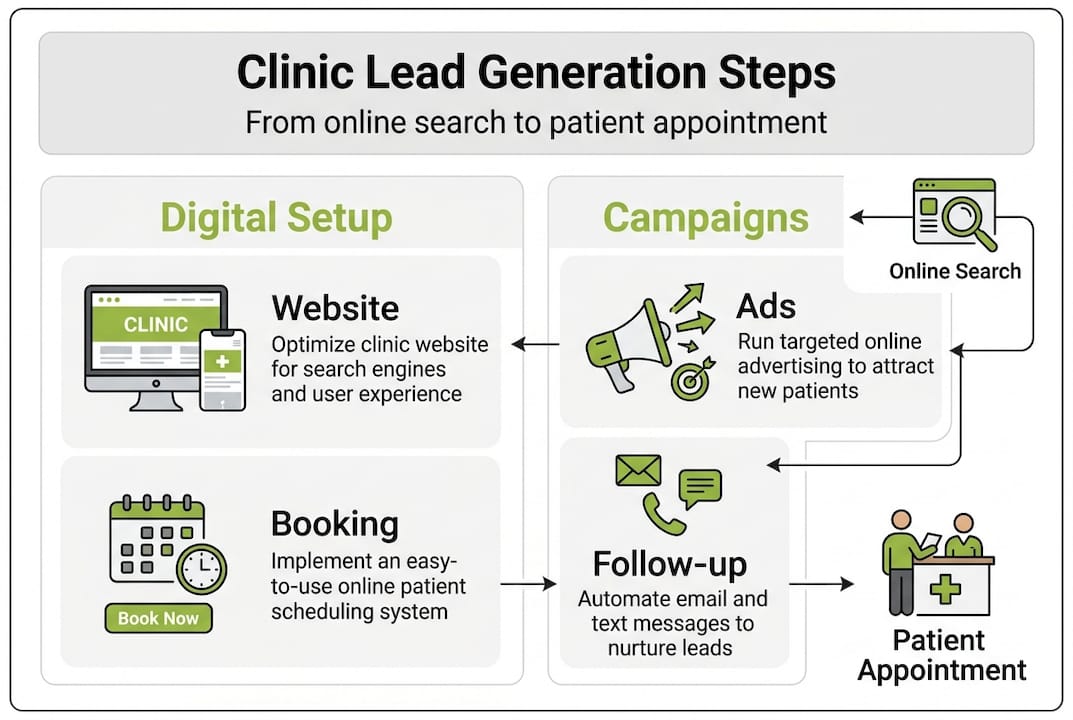
Pro Tip: Resist the urge to launch on every platform at once. Focus on one or two channels initially, learn what works, and scale from there. Spreading resources too thin is one of the fastest ways to burn through budget without results.
Executing lead generation campaigns for clinics
Once your digital blueprint is in place, it is time to move from planning to real-world action. Campaign execution is where most clinics either gain momentum or stall, and the difference usually comes down to preparation and consistency.
Follow these steps to launch your first campaign:
- Set a clear campaign goal (e.g., 20 new appointment requests per month).
- Build a dedicated landing page optimized for one specific service or patient concern.
- Create ad creative, email copy, or blog content aligned with that landing page.
- Set up conversion tracking in Google Analytics 4 before going live.
- Define your budget, run duration, and geographic targeting.
- Launch the campaign and monitor performance daily for the first two weeks.
Every campaign needs supporting assets to perform well:
- A focused landing page with a single, clear call to action
- Ad creative that speaks to a specific patient concern or benefit
- A follow-up email sequence for leads who do not book immediately
- Blog posts or educational content that build trust over time
- Social proof elements such as patient testimonials or accreditation badges
Multi-channel campaigns improve patient engagement and lead conversion rates significantly compared to single-channel efforts. According to data across healthcare sectors, average lead conversion rates range from 6% to 10%, depending on targeting quality and channel mix. Understanding what drives that number in your specific context is more valuable than chasing benchmarks.
Ad compliance and patient privacy must be built into every campaign. HIPAA regulations restrict how patient data is collected and used in advertising platforms. Work with a knowledgeable partner and review healthcare lead generation tips to stay compliant while staying competitive. You can also reference content marketing trends for fresh ideas on educating patients through helpful, trustworthy content.
Tracking results and optimizing for sustained growth
After campaigns go live, rigorous tracking ensures your efforts lead to real patient appointments and ongoing improvement. Without measurement, you are guessing, and guessing is expensive in healthcare marketing.
Focus on these core metrics from day one:
- Qualified leads: prospects who meet your target patient profile and have expressed genuine interest
- Lead-to-appointment conversion rate: how many leads actually book a visit
- Cost per lead: total spend divided by number of leads generated
- Patient show-up rate: how many booked appointments result in actual visits
- Return on ad spend: revenue attributed to each campaign relative to its cost
Continuous measurement and optimization are critical for maximizing healthcare marketing ROI. Without consistent tracking, even strong campaigns degrade over time as audience behavior and platform algorithms shift.
Tools and dashboards worth using:
- Google Analytics 4 for website behavior and conversion tracking
- Google Search Console for organic search performance
- Your CRM’s built-in reporting for lead status and follow-up tracking
- A call tracking platform like CallRail for phone lead attribution
- Social media native analytics for ad performance and engagement
- Zocdoc’s measurement resources for healthcare-specific benchmarks
Important: Misattribution hides which campaigns actually drive appointments. If your tracking is not set up properly, you may keep funding underperforming channels while cutting the ones that genuinely work.
Pro Tip: Add UTM parameters to every link in your campaigns and set up call tracking numbers for each ad source. This ties every phone call and form submission directly back to the campaign that generated it, giving you clean, actionable data.
Aligning your tracking with email engagement strategies adds another layer of visibility, especially for leads who enter your funnel through content but convert later through a follow-up email.
Why most clinics get lead generation wrong and what actually works
Most clinics invest in digital ads or a new website, see a short spike in inquiries, and then wonder why growth stalls six months later. The honest answer is that tools and tactics alone do not create sustained patient growth. Systems and people do.
The most common mistake is treating lead generation as a one-time campaign rather than an ongoing process. A clinic might spend heavily on a Google Ads push in January, book a handful of new patients, and then pull back thinking the job is done. Meanwhile, leads who were not quite ready in January have moved on to a competitor who stayed visible.
The second mistake is neglecting follow-up. Most patients do not book on first contact. They research, compare, and sometimes wait weeks before deciding. A clinic without an automated nurture sequence, a timely callback process, or consistent email communication will lose those leads silently.
Sustained growth comes from aligning staff behavior, digital processes, and campaign strategy into one cohesive system. The clinics that succeed long-term treat every lead generation insight as feedback, not just a number. They test messaging, adjust targeting, and retrain front-desk staff based on what the data reveals.
Quick wins are valuable for building momentum, but they can also breed overconfidence. The practices with the healthiest patient pipelines are the ones that stay curious, stay patient-focused, and never stop optimizing.
Accelerate your clinic’s growth with expert digital marketing
Ready to take your clinic’s lead generation to the next level with expert guidance? Building and managing the systems described in this guide takes time, specialized knowledge, and consistent execution. For busy healthcare marketing teams, partnering with experienced professionals closes the gap between strategy and results.
Idea Stream Marketing offers clinic marketing services purpose-built for healthcare organizations seeking scalable patient growth. From search campaigns and content strategy to AI-driven marketing systems that improve targeting and engagement, we bring full-spectrum expertise to your team. Whether you need a complete lead generation buildout or targeted support in specific areas, we tailor every plan to your clinic’s goals. Reach out today to schedule a consultation and get a customized growth roadmap built around your practice.
Frequently asked questions
What is the first step in clinic lead generation?
Assessing your digital readiness is the crucial first step, ensuring your website, booking systems, and staff workflows are in place before any campaigns go live.
Which digital channels work best for clinics?
Search engines, targeted social media ads, and email marketing consistently perform best for clinics, as these digital marketing channels reach patients at different stages of the decision-making process.
How do you track which campaigns deliver patient appointments?
Use UTM codes and call tracking tools to attribute every form submission and phone call to the specific campaign that generated it, giving you accurate marketing ROI data.
What is a good conversion rate for healthcare leads?
Healthcare lead conversion rates typically range from 6% to 10%, and multi-channel campaigns tend to push results toward the higher end of that range.
How can clinics quickly improve their lead generation results?
Focusing on your two strongest channels, building an automated follow-up sequence, and reviewing performance data weekly will generate measurable improvements faster than any other approach, as consistent optimization compounds over time.
Recommended
- Mastering Lead Generation: The Ultimate Guide for Business Growth | Web Design & Marketing Agency
- Exploring the Dual Approaches to Lead Generation Strategies
- Lead Generation | Full 360° Marketing Agency Long Island
- AI-Driven Marketing Strategies: Step-by-Step Guide for Business Growth | Web Design & Marketing Agency
- From data research to MQL. Guide to Lead Generation in 2025 – Sales Label IT Consulting