



October 16, 2026
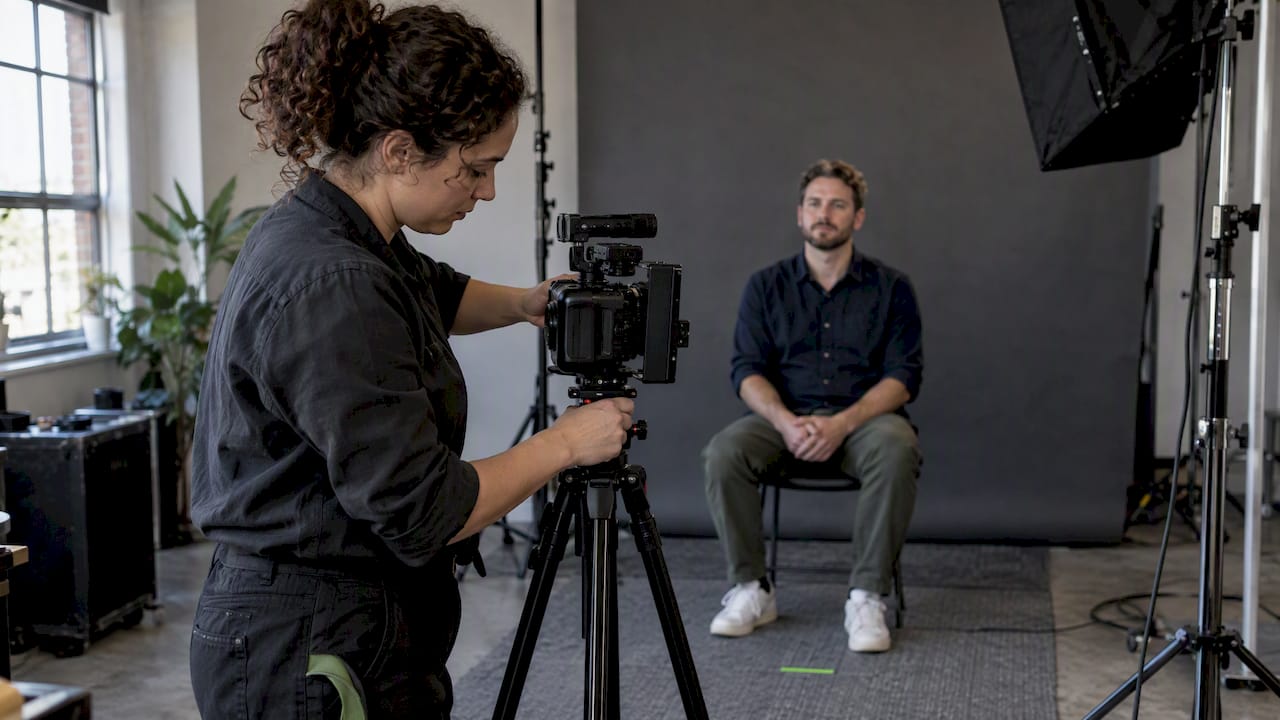



Short, role-specific employee testimonials and day-in-the-life clips (60–90 seconds) paired with a 15–30 second social cut are the formats that consistently convert best for most hiring teams. The immediate next step is to pick one hard-to-fill role, script a 60–90 second role preview featuring an employee and a hiring manager, and publish it directly to the job posting and your LinkedIn company page.
Here is what the evidence supports:
- Job postings with video earn 12% more views and a 34% higher application rate compared to text-only listings (CareerBuilder data, as reported in industry summaries).
- Candidates who watch a recruiting video are noticeably more likely to apply, based on pooled findings from Jobvite and similar industry studies.
- A study of approximately 10,000 candidates found that video-enhanced outreach reduced required candidate contact by 26.1% and increased candidates advancing to interviews by 35.5%.
- Idea Stream Marketing offers full-service recruitment video production, from scripting and filming through editing, captions, and social distribution, for hiring teams across the United States.
Key Takeaways
Short, role-specific employee testimonial and day-in-the-life videos are the highest-converting recruitment video formats, and the data consistently shows meaningful application rate and interview-stage uplifts when video is added to the hiring funnel.
| Point | Details | ||||||
|---|---|---|---|---|---|---|---|
| Start with one high-priority role | Script a 60–90s role preview with an employee and hiring manager clip for your hardest-to-fill position first. | ||||||
| Use the 34% application rate benchmark | Job postings with video earn a 34% higher application rate on average; track your own uplift against this figure. | ||||||
| Shoot once, publish multiple cuts | One half-day shoot produces a career-page version, a 30–60s LinkedIn post, and a 15–30s social ad. | ||||||
| Captions are non-negotiable | About 75% of people watch mobile videos on mute; every version of your video needs captions before publishing. | ||||||
| Idea Stream Marketing for full-service production | Idea Stream Marketing handles scripting, filming, editing, captions, and social distribution for hiring teams nationwide. |
Table of Contents
- What are recruitment videos and why do they work?
- What types of recruitment videos should you make?
- Annotated examples of recruitment videos that work
- How to create a recruitment video: a step-by-step process
- Where should you publish recruitment videos?
- How do you measure whether recruitment videos are working?
- Should you DIY your recruitment video or hire an agency?
- What we have learned producing recruitment videos for hiring teams
- Idea Stream Marketing produces recruitment videos built to convert
- Sources
- FAQ
What are recruitment videos and why do they work?
Recruitment videos are short, role-focused or employer-brand-focused video assets placed across the hiring funnel: job postings, career pages, LinkedIn, and paid social. They range from a 15-second Instagram cut to a 3-minute culture overview on your careers site. The core job they do is give candidates a realistic preview of the role and the team before they apply.
That preview matters more than most hiring teams realize. Candidates who watch a recruiting video are notably more likely to apply, and the ones who do apply tend to be better qualified because the video has already filtered out poor fits. This “authenticity filter” effect means fewer unqualified applications reaching your inbox, which saves screening time downstream.
Three other reasons video outperforms text in hiring:
- Passive candidate reach. A well-distributed video reaches people who were not actively job searching. A LinkedIn video post or a targeted paid ad can surface your opening to candidates who would never search a job board.
- Employer brand signals. Video communicates culture, team energy, and leadership style in ways a bullet-pointed job description simply cannot. Employee-generated content is seen as more credible than company messaging, which is why testimonial formats consistently outperform polished brand films for driving applications.
- Pre-qualification at scale. A realistic job preview video tells candidates what the role actually involves, so the people who apply have already decided they want that reality.
What types of recruitment videos should you make?
A 2026 guide from VidCruiter maps seven core video types and recommends matching format to platform and hiring goal. Here is a practical breakdown:
- Employee testimonials (60–90s). The highest-converting format for most roles. One employee speaks to what the job is actually like day-to-day. Best for hard-to-fill or high-volume roles. Shoot in the actual workspace, not a conference room.
- Day-in-the-life videos (90–180s for career page; 30s cut for social). Follow an employee through a real shift or workday. Works especially well for trades, healthcare, retail, and any role where candidates cannot easily picture the environment. See our guide on capturing authentic testimonial footage for framing tips.
- Role-specific skills demos (60–120s). Show what the job requires technically. Useful for engineering, manufacturing, or specialized professional roles where candidates want to know if they are qualified before investing time in an application.
- Office and facility tours (60–120s). Give candidates a sense of the physical environment. Particularly effective for in-person roles where location or workspace quality is a selling point.
- Diversity, equity, and inclusion (D&I) videos (90–180s). Feature employees from different backgrounds speaking to their experience. Use these for employer-brand campaigns rather than individual job postings. Authentic casting matters here more than production polish.
- Leadership messages (30–60s). A direct-to-camera message from a hiring manager or executive. Short, specific, and personal. Works well as an email attachment or LinkedIn post to warm up passive candidates before outreach.
For social platforms, keep cuts to 15–30 seconds. Career pages support 60–180 seconds. Start with employee testimonials and role previews for your hardest-to-fill positions, then build culture and D&I content once you have the core formats working.
Annotated examples of recruitment videos that work
The best employer brands treat their hiring content as seriously as their customer-facing advertising. Here is what each standout example does right.
- Apple. Apple’s recruitment content leans on specificity: engineers and designers describe actual projects, not generic “we change the world” language. The production is clean but not sterile, and the employee voices are clearly unscripted. The lesson: let real work speak.
- Google. Google publishes role-specific videos tied to individual teams, not just the company overall. A candidate for a data engineering role sees a data engineer, not a VP. That specificity drives better self-selection and reduces mismatched applications.
- HubSpot. HubSpot’s culture videos are shot in real offices with real employees and include candid moments. The brand’s transparency about remote work policies and team structures makes the content credible. Candidates trust it because it does not look like an ad.
- Starbucks. Starbucks uses day-in-the-life content for barista and shift supervisor roles, showing the actual pace and environment of a store. For high-volume hourly hiring, this format reduces no-shows and early attrition because candidates know what they are walking into.
- Home Depot. Home Depot’s recruitment content features employees across departments and career levels, including people who started in entry-level positions and advanced. That career-path framing is a strong retention signal before a candidate even applies.
- Fiverr. Fiverr’s employer brand videos focus on the company’s remote-first culture and the autonomy employees have. Short, mobile-first cuts distributed on LinkedIn and Instagram reach the freelance-adjacent talent pool they are recruiting from.
- Dropbox. Dropbox uses leadership message videos from hiring managers sent directly to sourced candidates. The format is low-production but high-trust, and it works because it feels personal rather than broadcast.
- Barclays. Barclays produces structured D&I videos featuring employees from underrepresented groups speaking to their experience and career growth. The content is embedded in graduate recruitment campaigns and career fair materials, extending reach beyond job boards.
- Citadel. Citadel publishes technical role previews for quantitative and engineering positions that go deep on the actual work. For a highly selective talent pool, showing intellectual rigor in the content itself signals the right culture fit.
- IKEA. IKEA’s recruitment videos are notable for featuring employees in multiple languages and locations, reinforcing the global culture while keeping each clip locally relevant. The production is warm and approachable, matching the brand’s consumer identity.
- Johnson & Johnson. J&J uses purpose-driven storytelling in their recruitment content, connecting individual roles to patient outcomes. For healthcare and science roles, that mission framing is a genuine differentiator in a competitive talent market.
- Spotify. Spotify’s employer brand videos lean into creative culture and team autonomy, with employees describing how they work rather than what they do. The editing style matches the brand’s consumer product, which signals cultural alignment to candidates who are already Spotify users.
Pro Tip: Shoot one long-form interview session (10–15 minutes) with each featured employee, then cut it into a 90-second career-page version, a 30-second LinkedIn post, and a 15-second Instagram reel. One shoot, three assets, and the footage stays consistent across platforms.
How to create a recruitment video: a step-by-step process
A solid video storytelling framework makes the production process repeatable. Here is a workflow you can hand to an internal comms person or brief to an agency.
- Define the goal and the audience. Decide which role you are filling, what the candidate’s biggest concern is (pay, culture, growth, flexibility), and where the video will live (job posting, LinkedIn, career page).
- Write the script using this three-part structure:
- Hook (0–10s): One specific, honest line from the employee. “I write code that ships to 40 million users every week.” Not “I love working here.”
- Role reality (10–60s): What the job actually involves, who the team is, and one thing that surprised the employee when they started.
- CTA (60–75s): Direct and simple. “If this sounds like your kind of work, the link to apply is below.” See our full guide on scripting marketing videos for more templates.
- Build your shot list for a half-day shoot:
- Employee on-camera interview (primary audio source)
- B-roll of the actual workspace, tools, or team environment
- One short clip of the hiring manager (30 seconds, direct to camera)
- Any product, equipment, or environment that defines the role
- Handle permissions before the shoot day. Get written consent from every employee who appears on camera. Confirm your organization’s approval process for published video content. The Canada Public Service’s video recruitment toolkit recommends a formal approvals workflow covering permissions, privacy, and accessibility requirements.
- Edit for the platform. Cut the full interview to 60–90 seconds for the career page, then pull a 15–30 second clip for social. Add captions to every version. About 75% of people watch mobile videos on mute, so captions are not optional.
- Publish and embed. Add the video directly to the job posting, the career page role section, and your LinkedIn job update. Include a visible apply link in the video description.
- Measure. Track views, watch-time completion rate, click-through to apply, and application volume week-over-week.
Use this video content checklist to confirm you have covered every pre-flight item before the shoot.
Production timeline and ballpark US costs
Where should you publish recruitment videos?
Distribution determines reach. A well-produced video sitting only on your careers page will underperform a decent video placed across five touch points. Use this placement checklist:
- Career page role sections. Embed directly on the individual job listing page, not just the main careers landing page. Candidates who land on a specific role are already interested; video keeps them there longer and increases apply rates.
- Job postings on LinkedIn and Indeed. LinkedIn supports native video uploads on job posts and company updates. Native video plays in-feed without a click, which dramatically increases views compared to external links.
- LinkedIn targeted ads. Paid video ads on LinkedIn let you target by job title, industry, company size, and seniority. Use the 15–30 second social cut here, with a direct apply CTA in the caption.
- Instagram and TikTok. Effective for reaching younger candidates and hourly workers. Keep clips under 30 seconds, shoot vertically, and add captions. TikTok’s algorithm rewards authentic, low-production content, so employee-generated clips often outperform polished brand films.
- YouTube. Host the full-length career-page version on YouTube and optimize the title, description, and tags for the role and location. This supports video SEO and makes the content discoverable through Google search.
- Recruiter email outreach. A hiring manager video embedded in a sourcing email to passive candidates can significantly increase response rates. Keep it under 60 seconds and make the subject line specific to the role.
- Employee social sharing. Ask featured employees to share the video on their own LinkedIn profiles. Employee networks typically reach candidates who do not follow your company page.
For paid campaigns, A/B test two creative versions: one leading with the employee’s voice, one leading with a specific role benefit (pay, flexibility, career path). Let the data decide which hook converts better for each role.
How do you measure whether recruitment videos are working?
Tracking the right metrics connects video performance to actual hiring outcomes. Primary KPIs to monitor:
- View count and watch-time completion rate. A completion rate above 50% on a 60–90 second video indicates the content is holding attention. Below 30% usually means the hook is weak or the video is too long.
- Click-through to apply rate. The percentage of viewers who click the apply link after watching. This is the most direct conversion metric.
- Application volume uplift. Compare weekly application volume for the role before and after publishing the video. Job postings with video earn a 34% higher application rate on average, so a meaningful lift is a realistic benchmark.
- Qualified candidate rate. Track what percentage of applicants advance past the initial screen. A good role-preview video should increase this number by filtering out poor fits before they apply.
- Time-to-hire change. Video-enhanced outreach has been shown to increase candidates advancing to interviews by 35.5%, which can compress the time between posting and offer.
- Cost-per-application. Divide total video production and distribution spend by the number of applications received. Compare this to your baseline cost-per-application from text-only postings.
Connect your video platform analytics (YouTube Studio, LinkedIn analytics, or your ATS’s video integration) to your applicant tracking system so you can see which video sources produce candidates who actually get hired, not just candidates who click apply.
For job screening strategies that pair well with video-driven pipelines, consider how video pre-qualification changes your screening workflow before you redesign your funnel.
Should you DIY your recruitment video or hire an agency?
The honest answer depends on the role, the stakes, and what you have in-house.
DIY is a reasonable choice when:
- The role is entry-level or high-volume and the candidate experience does not require polished production.
- You have a smartphone with a decent camera, a quiet space, and a willing employee.
- You are testing a format before committing budget to a full production.
- Your internal comms or marketing team has basic video editing skills.
Hire a production partner when:
- The role is senior, specialized, or hard to fill, and the video is part of a competitive employer-brand push.
- You need multiple formats from one shoot (career page, social cuts, paid ads) and want consistent quality across all of them.
- Executive messaging or D&I content requires professional lighting, sound, and editing to land with credibility.
- You want the video to support SEO, YouTube optihttps://ideastreammarketing.com/services/mization, and paid distribution, not just sit on a job posting.
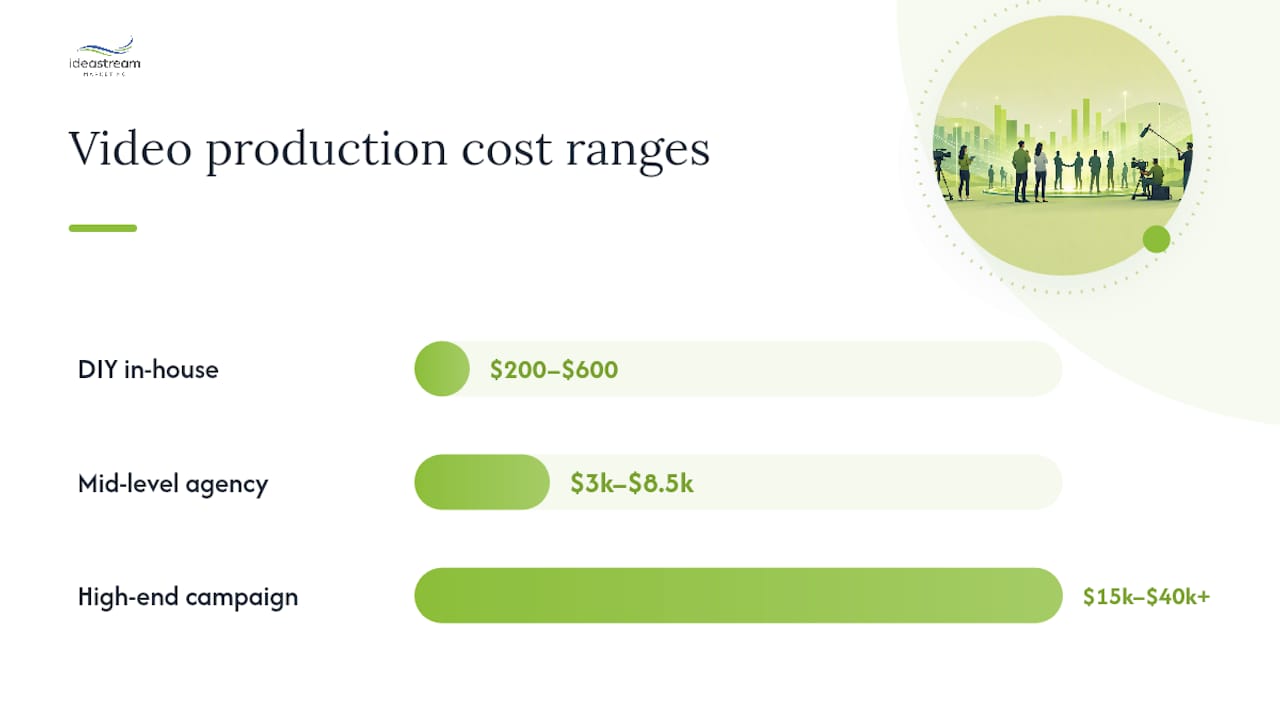
A simple in-house shoot with a phone, a ring light, and free editing software can cost $200–$600 in gear. A mid-level agency production covering one role with two or three deliverables typically runs $3,000–$8,500 in the US market. High-end employer-brand campaigns with multiple locations and professional post-production can reach $15,000–$40,000 or more.
Before any shoot, address these legal and consent tasks:
- Written consent from every employee appearing on camera, specifying where the footage will be published and for how long.
- Review your organization’s media release policy and any union agreements that govern on-camera appearances.
- Confirm that the video does not include any language, imagery, or casting choices that could imply a preference for candidates of a particular age, race, gender, or national origin, which would violate Title VII of the Civil Rights Act and related EEOC guidelines.
- If you collect candidate data through a video application or interactive video tool, confirm your data handling practices comply with applicable state privacy laws.
What we have learned producing recruitment videos for hiring teams
The most common mistake we see is treating a recruitment video like a brand commercial. A brand commercial is designed to make people feel something about a company. A recruitment video is designed to help a specific person decide whether a specific job is right for them. Those are different objectives, and they require different content.

The hiring teams that get the best results from their video content do three things consistently. First, they feature the actual hiring manager, not just a polished employee ambassador. Candidates want to know who they will report to, and a 30-second direct-to-camera clip from the manager adds more trust than any amount of production value. Second, they shoot more footage than they think they need. A half-day shoot that produces 90 minutes of raw footage gives the editor enough material to build a strong 90-second cut without forcing awkward transitions. Third, they get approvals locked before the shoot, not after. Waiting for legal or HR sign-off on a finished video is where timelines collapse. Build the approval workflow into pre-production.
One practical shortcut: send the employee a list of five questions 48 hours before the shoot. Ask them to think about their answers but not to memorize a script. The result is natural, specific, and credible, which is exactly what candidates respond to.
Idea Stream Marketing produces recruitment videos built to convert
Hiring teams that want professional results without managing a production from scratch have a direct route: Idea Stream Marketing handles the full process, from scripting and shoot day through editing, captions, and social distribution.
We produce recruitment and advertising video content for organizations across the United States, including role-specific employee testimonials, day-in-the-life shoots, leadership message clips, and multi-format social packages. Every project is built with distribution in mind: the career page version, the LinkedIn cut, and the paid ad creative come from one coordinated shoot, so you get three assets without three separate production days. We also handle video SEO, metadata, and YouTube optimization so your content stays discoverable long after the initial posting.
If you have a hard-to-fill role, an upcoming hiring push, or an employer-brand campaign that needs professional production, reach out to our team to discuss your project and get a production plan.
Sources
- The Power of Video in Recruitment: Engaging Candidates with Dynamic Content
- Recruitment Video Examples & Complete Guide for 2026
- Canada
- Pr
- 7 Stats That Prove Why You Need To Be Making Employee Videos
FAQ
How do you make a good recruitment video?
Lead with a specific, honest line from a real employee rather than a scripted brand message, keep the video to 60–90 seconds for career pages and 15–30 seconds for social, and add captions to every version. The goal is to give candidates a realistic preview of the role so the right people apply and the wrong ones self-select out.
What is the 70/30 rule in hiring?
Definitions vary by organization, but the principle is to maintain a pipeline that includes candidates who are not actively job searching, which is where video-enhanced outreach and social distribution are particularly effective.
What are the seven steps of the recruitment process?
A standard recruitment process covers: defining the role and requirements, sourcing candidates, screening applications, conducting interviews, assessing and selecting finalists, extending an offer, and onboarding. Recruitment videos can support the first three steps by attracting more qualified candidates and pre-qualifying them before the screening stage.
How much does a professional recruitment video cost in the US?
A mid-level agency production covering one role with two or three deliverables typically runs $3,000–$8,500 in the US market. A simple in-house shoot using a smartphone and basic editing software can cost $200–$600 in gear. High-end employer-brand campaigns with multiple locations and professional post-production can reach $15,000 or more.
Where should you post recruitment videos for the best results?
Embed the video directly on the individual job listing page, publish a native video post on LinkedIn, and distribute a 15–30 second cut on Instagram or TikTok for roles targeting younger or hourly workers. Adding the full version to YouTube with optimized metadata also makes the content discoverable through Google search long after the initial posting.

