



September 10, 2026

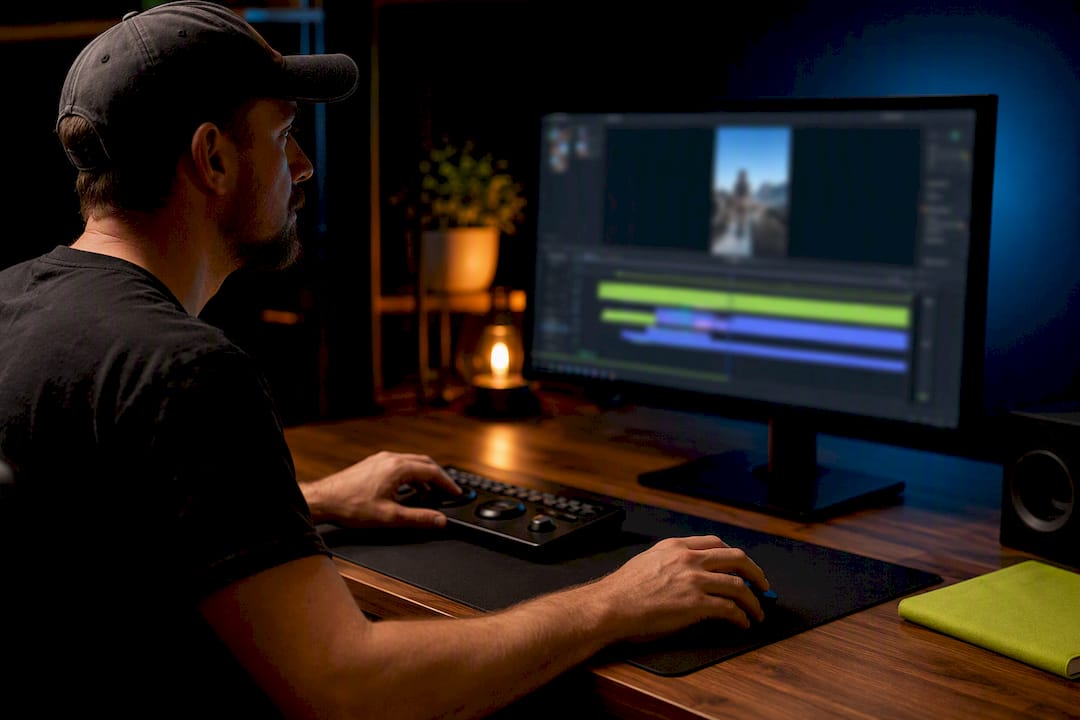

If you’re a small business owner wondering where to start, the verdict is simple: prioritize short-form social clips alongside one repurposable explainer or demo video, and build a batching workflow so you’re not filming from scratch every week. Short-form video remains the highest-ROI format for marketers heading into 2026. Pick one platform today and record a 60-second clip on your phone. That single action beats another week of planning.
TL;DR:
- Short-form social clips are highly effective for awareness and should be filmed quickly on a phone, focusing on a clear problem and fix message.
- Starting with one reusable explainer or demo video allows small businesses to generate ongoing content without constant reshooting, maximizing ROI.
- Batch filming for a few hours each month can produce enough content for several weeks, using simple setup and AI tools to simplify editing and captions.
- Metrics like watch retention and click-throughs are more meaningful than total views, guiding content adjustments to improve lead and sales results.
- Embedding videos with transcripts and optimized titles on websites enhances search visibility and long-term discoverability.
Table of Contents
- What Types of Videos Should Small Businesses Make First?
- Where Should You Publish Each Video, and How Do You Adapt It?
- What Gear and Editing Shortcuts Actually Improve Video Quality?
- How Do You Batch a Month of Video Content in One Session?
- Which Metrics Actually Prove Your Videos Are Working?
- How Do You Make Your Videos Show Up in Search?
- How Idea Stream Marketing Helps Small Businesses Scale Video
- A Budget-Friendly Starter Plan: What Actually Moves the Needle
- Ready to Scale Beyond DIY Video?
- Sources
- FAQ
What Types of Videos Should Small Businesses Make First?
Not every video deserves equal effort. Some formats build awareness, others close deals, and knowing which is which keeps you from wasting a shoot day on the wrong content.
The US Chamber of Commerce identifies five video types that consistently perform for small businesses: customer testimonials, explainers and demos, how-to videos, behind-the-scenes content, and short social clips. Each one plays a different role depending on where a customer sits in your funnel.
- Short-form social clips (15 to 60 seconds, vertical 9:16) work at the awareness stage. One-sentence formula: “Here’s the mistake most people make with [problem], and here’s the fix.”
- Explainers and demos (60 to 90 seconds, horizontal or square) target consideration. Formula: “Here’s how [product/service] solves [specific pain point] in three steps.”
- Customer testimonials (30 to 60 seconds) push conversion. Formula: “I had [problem], I tried [business], and here’s what changed.”
- How-to videos (2 to 5 minutes, horizontal for YouTube) build trust and search traffic simultaneously. Formula: “Here’s exactly how to [task] without hiring someone else.”
- Behind-the-scenes clips (15 to 45 seconds) humanize your brand and work well as filler content between bigger campaigns.
Start with one explainer or demo you can reuse for months, then feed short-form clips from it into your social channels every week.
Where Should You Publish Each Video, and How Do You Adapt It?
Every platform has a different job. YouTube functions like a search engine and rewards evergreen, keyword-rich content. Instagram Reels, TikTok, and Facebook Reels reward discovery and reach new audiences who’ve never heard of you. LinkedIn works for B2B founder content and lead generation. Email and landing pages exist purely to convert people who already know you.
Match your format to the platform’s aspect ratio: vertical 9:16 for Reels, Shorts, and TikTok; horizontal 16:9 for YouTube and website embeds; square 1:1 works everywhere in a pinch. Keep captions on by default. Most social video gets watched muted, and captioning is a near-zero-cost lift that raises completion rates. Choose a clear, high-contrast thumbnail frame rather than letting the platform auto-select one.
For repurposing, follow a simple sequence: film one long-form piece, cut it into three to five short clips, add captions to each, then schedule them across the week. This single workflow is how small teams keep a steady publishing cadence without reshooting content constantly.
What Gear and Editing Shortcuts Actually Improve Video Quality?
Buy a microphone before you buy a camera. Viewers forgive soft focus and imperfect lighting far more readily than they forgive muddy or echoey audio, and audio quality matters more than expensive production gear for how professional a video feels. A $30 to $60 lavalier or shotgun mic that plugs into your phone will outperform your camera’s built-in mic every time.
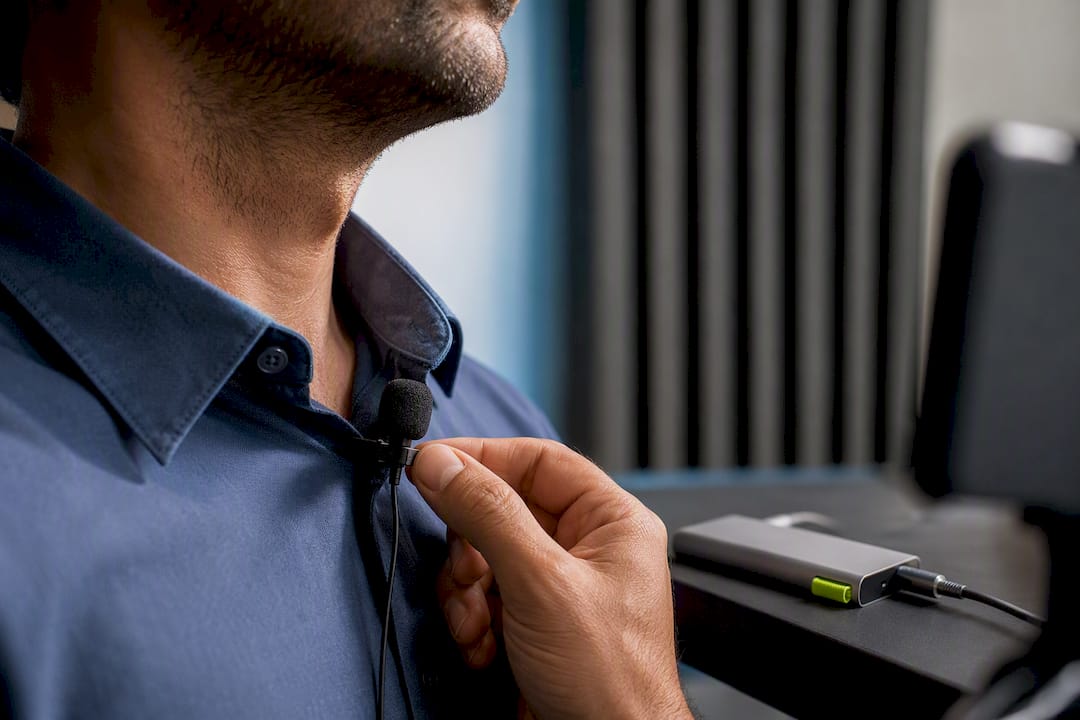
After audio, lighting is the next lever. Face a window during daylight hours, or invest in one affordable ring light for consistent indoor shoots. Framing matters less than people assume, but a clean, uncluttered background instantly reads as more polished — following visual storytelling tips to boost your brand’s impact can make a big difference.
Here’s a simple setup checklist for solo operators:
- Mount your phone at eye level using a tripod or stack of books.
- Position yourself facing a window or a single soft light source.
- Clip on an external microphone before hitting record.
- Frame with headroom, but keep your face filling most of the vertical shot.
- Record two or three takes of your hook line so editing has options.
For polish, lean on templates instead of building graphics from scratch. Mobile apps like CapCut handle captions, jump cuts, and basic color correction quickly, while desktop tools like Adobe Premiere Rush or DaVinci Resolve work for slightly longer explainer content. AI-assisted editing tools have seen rapid adoption among marketers specifically because they automate captions and rough cuts, saving small teams hours per week. None of this requires a production budget. It requires fifteen extra minutes of setup before you press record.
How Do You Batch a Month of Video Content in One Session?
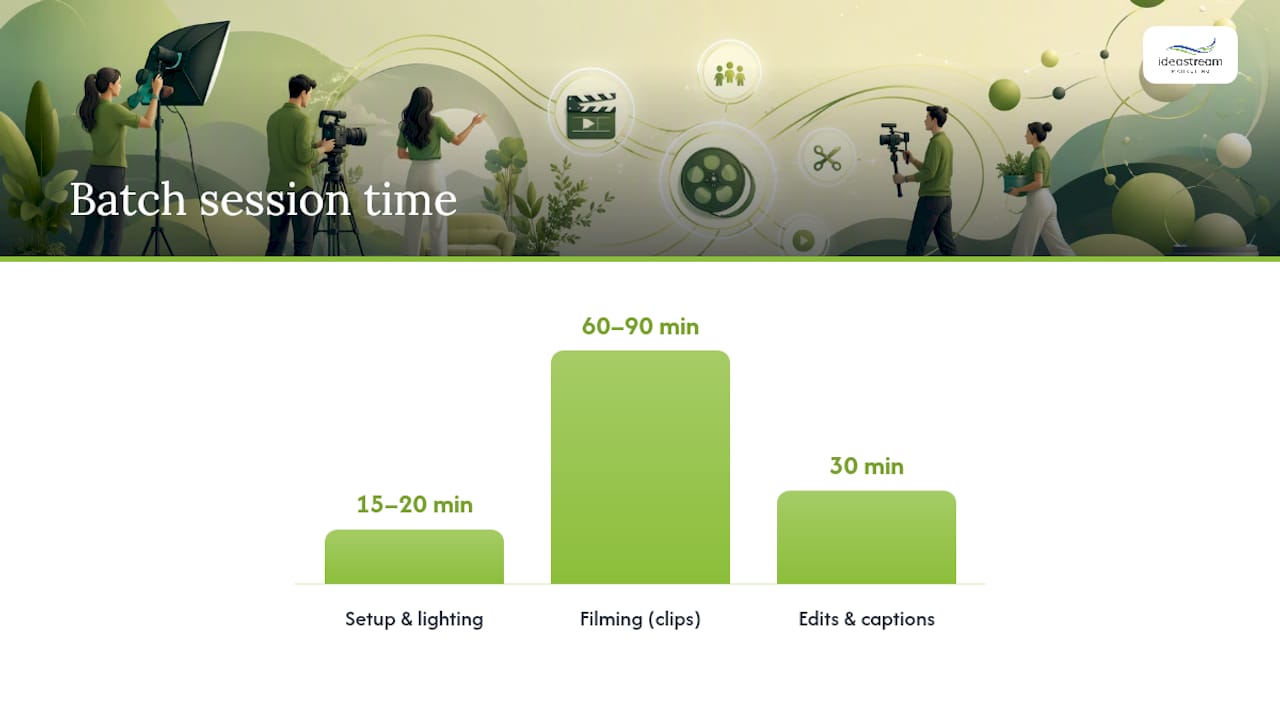
A single two-hour session, run correctly, can produce enough footage for weeks of posting. The structure that works best for small teams: spend the first 15 to 20 minutes on setup and lighting, then film for 60 to 90 minutes covering six to eight short clips, then spend a final 30 minutes on quick edits and captions using templates. That workflow typically yields eight to ten social assets plus one longer explainer from a single sitting.
Use this script skeleton for every clip you record: state the context in one sentence, deliver the value or answer in two sentences, then close with a one-line call to action. This structure gives you natural edit points if you need to trim length later.
A simple 30-day starter plan looks like this:
- Week 1: Record your batch session. Post one explainer video and two short clips.
- Week 2: Post two short clips and one testimonial-style video.
- Week 3: Post two how-to clips and one behind-the-scenes piece.
- Week 4: Repost your best-performing clip with new captions, then plan your next batch session.
A solo founder can realistically run this whole cycle in about three hours a month. A small team with a dedicated marketer can expand to weekly batching and layer in paid promotion once a format proves itself.
Which Metrics Actually Prove Your Videos Are Working?
Match your metric to your goal instead of tracking everything at once. If the goal is awareness, watch reach and total views. If the goal is engagement, watch average watch time and completion rate. If the goal is leads or sales, watch click-throughs, form fills, and conversions tied directly to that video.
Pro Tip: Retention beats raw view count almost every time. A clip with 500 views and 80 percent average watch time is outperforming a clip with 5,000 views and a 10 percent completion rate, because the algorithm and your audience both reward content people actually finish.
Short-form video’s strength as a top ROI format for 2026 comes directly from this retention effect. Build a simple KPI scoreboard: one goal, one metric, one target per video type. For example: “Explainer video, goal = leads, target = 20 landing-page clicks per month.” Review it monthly and cut whatever format isn’t hitting its number.
How Do You Make Your Videos Show Up in Search?
Video only compounds in value if people can find it months after you post it. On YouTube, treat your title and description like a search listing: put your primary keyword near the front of the title, write a two-to-three sentence description with that keyword repeated naturally, and add chapters for anything over three minutes. Tags still help, though they matter less than a clear title and thumbnail.
On your own website, embed video above the fold on landing pages. Video embedded on landing pages has been linked to significant conversion increases compared with text-only pages. Add a transcript beneath the embed and mark it up with video schema so search engines and AI answer engines can parse the content correctly.
- Place your target keyword in the first eight words of your YouTube title.
- Add a full transcript to every website video, not just a caption file.
- Use one clear, high-contrast custom thumbnail per video.
- Repurpose the transcript into a short blog post to double your search footprint.
Turning a single video transcript into a supporting blog article gives you two pieces of indexable content from one recording session, and it’s one of the highest-leverage moves in this entire plan.
How Idea Stream Marketing Helps Small Businesses Scale Video
Dean Spinato founded Idea Stream Marketing to combine professional video production with the discoverability side most agencies ignore. The team produces corporate videos, testimonials, brand story content, and business podcasts, then pairs that production with AI SEO and video optimization so the work keeps generating traffic long after it’s published.
For businesses already recording podcasts or interviews, Idea Stream Marketing repurposes that raw footage into social video content across Instagram Reels, TikTok, and YouTube Shorts, stretching one recording session into weeks of usable clips. A consultation typically starts with a review of current content, goals, and formats that fit a team’s capacity, followed by a production recommendation.
A Budget-Friendly Starter Plan: What Actually Moves the Needle
Most advice on video marketing overcomplicates the first ninety days. Business owners get told to build a full content calendar, invest in a camera rig, and hire an editor before they’ve even tested whether their audience responds to video at all. That order is backwards. Test cheap and fast first, with a phone and a decent microphone, then scale production once you know which format actually drives replies, calls, or sales.
The conventional wisdom oversells production value and undersells consistency. A slightly rough testimonial posted every week will outperform one beautifully lit commercial posted twice a year, because algorithms and trust both reward frequency. Where I’d push back hardest on typical advice: don’t wait for a “content strategy” before you start. Record something today, watch what happens to watch time and replies, and adjust. The batching workflow in this plan exists precisely so you can test fast without burning a weekend every time.
Once a format proves itself with your audience, that’s the moment to bring in a professional team, not before.
Ready to Scale Beyond DIY Video?
Idea Stream Marketing exists for the moment your budget-friendly clips start working and you need production quality that matches the demand. Where a DIY setup tops out at phone footage and template edits, a professional studio can add lighting, sound treatment, drone cinematography, and video SEO that helps keep content ranking after posting. For those already recording a podcast, episodes can be turned into batches of polished social clips instead of leaving footage unused.
A consultation starts with a look at what you’re already producing and where the gaps are: maybe it’s a homepage explainer, maybe it’s turning long interviews into weekly Reels and Shorts, maybe it’s a full video-in-advertising campaign. From there, we recommend a format mix and production schedule built around your actual bandwidth, not a generic template. Schedule a consultation or studio session with Idea Stream Marketing to see what a professional batch shoot could add to your current plan.
Sources
The video statistics and platform trends cited throughout this piece come from SocialPilot’s 2026 video marketing statistics roundup, which tracks short-form ROI and AI-adoption trends among marketers. The US Chamber of Commerce breaks down which video formats work best for small businesses specifically. For batching workflows and script structure, Moonb’s practical guide offers a concrete session-by-session template. HubSpot’s State of Video Marketing research backs the audio-first production advice, and Atlassian’s Loom blog covers distribution and repurposing tactics in more depth.
- 95+ Video Marketing Statistics You Need to Know in 2026 — SocialPilot
- 5 Most popular types of video content for small business marketing — US Chamber CO-
- State of video marketing insights — HubSpot (State of Video Marketing)
- Small-Business Video Marketing: 9 Affordable Ideas — Atlassian / Loom
FAQ
How much should a small business spend on video marketing?
Many small businesses start with a smartphone, an external microphone, and a ring light, then reinvest in professional production once a format proves it drives leads.
What’s the single best type of video for a small business to start with?
A short explainer or demo video you can repurpose into multiple short-form clips gives you the most mileage for the least production effort.
Do I need a camera, or is a smartphone enough?
A modern smartphone is enough for most small business video, and buying a good external microphone matters more than upgrading your camera.
How often should a small business post video content?
Posting two to four short clips per week alongside one longer piece per month keeps a consistent cadence without requiring daily filming.
Can a podcast be turned into social video content?
Yes. Podcast episodes can be repurposed into short vertical clips for Instagram Reels, TikTok, and YouTube Shorts, and Idea Stream Marketing specializes in this exact repurposing workflow.