



October 16, 2026



Yes, start a branded podcast if you can commit to one clear business goal and a defined listener persona for multiple episodes. Skip it if you just want another content checkbox with no owner. Your one move today: write down the single objective (leads, authority, retention, or recruiting) and describe the exact person you want listening.
TL;DR:
- Setting a clear business goal and target listener persona before recording ensures your podcast aligns with your strategic objectives.
- Batch recording three to five episodes prior to launch provides a buffer against guest cancellations and maintains consistent publishing.
- Choosing a reliable hosting platform with analytics and syncing content with your broader marketing enhances measurement and content integration.
- Clear legal, equipment, and ownership roles are essential to avoid common pitfalls, ensuring smooth production and compliance from the start.
Table of Contents
- How to Start a Business Podcast: A Quick Launch Checklist
- How Do You Set a Podcast Strategy That Ties to Business Results?
- What Equipment and Workflow Do You Need to Produce a Podcast?
- Where Should You Host, Distribute, and Promote Your Episodes?
- How Do You Measure Whether a Business Podcast Is Working?
- How Do You Find and Manage Podcast Guests?
- What Legal Considerations Apply to a Business Podcast?
- How Much Does It Cost to Produce a Business Podcast?
- Who Should Own Each Part of a Business Podcast?
- How Do You Build Long-Term Audience Engagement Around a Podcast?
- How Does a Podcast Fit Into Your Broader Marketing Plan?
- An Agency’s View on What Actually Makes Business Podcasts Work
- Ready to Launch Your Business Podcast? Here’s How Idea Stream Marketing Helps
- Sources
- FAQ
How to Start a Business Podcast: A Quick Launch Checklist
Getting from idea to a published show is mostly a sequencing problem. Miss a step and you either launch late or launch something nobody can find.
- Confirm your primary business goal and target-listener profile before you touch a microphone.
- Choose your format, episode length, cadence, and three to five content pillars.
- Assemble minimum viable recording gear and treat your room for sound.
- Batch record three to five episodes so you have a buffer before launch.
- Prepare cover artwork, write show notes, and generate transcripts for each episode.
- Select a podcast host, build a podcast page on your website, submit to directories, and plan launch-week promotion.
A few details make or break this sequence:
- Skipping step one is the most common failure. Teams record a season before anyone agrees on what “success” means.
- Three to five episodes in the bank means you never miss a publish date because a guest cancels.
- Directory submission (Apple Podcasts, Spotify, YouTube) can take a few days to process, so build that lag into your timeline.
Neal Schaffer’s marketer’s playbook for launching a podcast recommends this exact batching approach, plus a trailer episode released a week before the first full episode to seed subscriptions early.
How Do You Set a Podcast Strategy That Ties to Business Results?
Pick one primary objective. Lead generation, thought leadership, customer retention, or recruiting all justify a podcast, but each pulls the show in a different direction, and trying to serve all four at once produces a show that serves none of them well.
Once the goal is set, build a listener persona around role, company size, and the topical problems that person actually loses sleep over. This persona should read like a real job description, not a demographic sketch. Then match your format to the goal: interview-style shows tend to work for lead generation and relationship building, solo commentary builds authority faster, and a hybrid format balances both. Neal Schaffer’s guide makes the same format-to-goal argument for marketers specifically.
From there, set three to five content pillars, recurring themes that keep every episode on brand instead of wandering. A B2B services firm might run pillars like “client transformation stories,” “industry trend breakdowns,” and “operator Q&A.” Build a lightweight episode template around each pillar so producers aren’t reinventing structure every week.
Finally, define success metrics before episode one airs:
- ICP (ideal customer profile) match rate among listeners
- Presence of target accounts in your download or engagement data
- Pipeline influence, meaning deals that touched a podcast episode
- A monthly reporting cadence to leadership
Podbean’s branded podcast guide frames this correctly: a branded show is company-owned media, and its return should be judged on long-term brand impact, not weekly download spikes.
Pro Tip: Write your podcast’s one-sentence mission statement and pin it above your recording setup. If an episode idea doesn’t serve that sentence, cut it, no matter how interesting the guest is.
What Equipment and Workflow Do You Need to Produce a Podcast?
You don’t need a broadcast studio to sound credible, but you do need a repeatable process, because inconsistency is what makes listeners drop off faster than mediocre audio does.
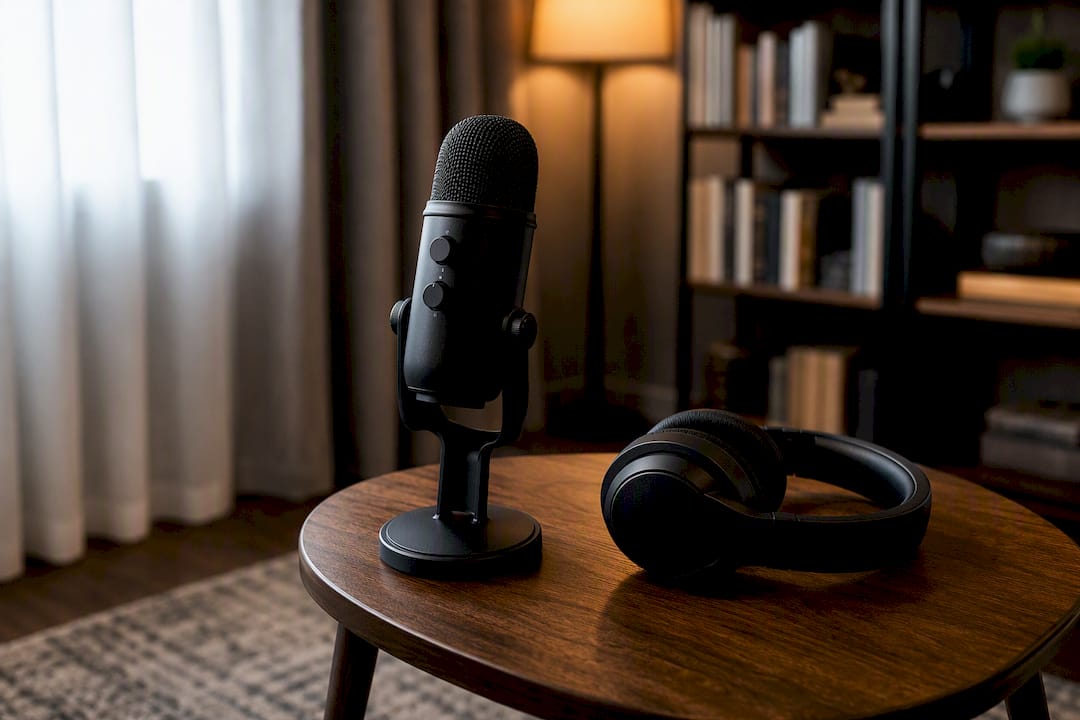
Minimum viable equipment starts with one USB microphone per speaker (not a shared table mic), closed-back headphones so hosts can monitor without feedback, and a quiet room with soft surfaces. A closet full of clothes or a room with a rug, curtains, and a bookshelf will kill enough echo to sound professional. You don’t need foam panels on day one.
Recording workflow matters more than gear. For remote guests, always record a local backup track on their end (most conferencing tools support this) so a bad internet connection doesn’t cost you the interview. Confirm audio levels in the first two minutes and keep a spare set of earbuds on hand for guests who show up without headphones.
Editing checklist for every episode:
- Remove dead air, filler words, and false starts
- Normalize loudness to a consistent target across episodes
- Add intro and outro music (properly licensed, more on that below)
- Insert chapter markers for longer interviews
- Run a transcript quality check before publishing
Batching is your insurance policy. Record three to five episodes before you launch, and keep at least a two-episode buffer going forward. Hashmeta’s corporate podcast strategy guide notes that many branded shows don’t see real traction until 20 to 30 episodes in, so the workflow needs to survive months of production without burning out your team.
Pro Tip: Export five deliverables from every recording session, not one: the full episode, three to five short clips for social, a full transcript, written show notes, and updated metadata. That single habit is what turns one recording session into a week of content.
Where Should You Host, Distribute, and Promote Your Episodes?
A podcast host does more than store your files. Look for reliable analytics, exportable audience data you can match against your CRM, and straightforward upload tools, since a marketer stuck fighting clunky software will stop producing consistently. Neal Schaffer’s playbook points out that the right hosting platform saves real production time every week through automatic distribution and built-in transcription.
Once your host generates an RSS feed, submit your show to Apple Podcasts, Spotify, and YouTube, and claim each listing with accurate artwork and descriptions.
Launch week deserves its own plan:
- Release a trailer episode a week ahead to seed early subscribers
- Drop three episodes at once on launch day so new listeners have something to binge
- Send a launch email to your existing list and customer base
- Cut short clips for Instagram Reels, TikTok, Facebook Reels, and YouTube Shorts from your best moments
- Have your team and leadership share the episode on LinkedIn the same day
Every episode should become five or six pieces of content: a blog recap, an email feature, and multiple short-form video clips. That repurposing habit is the single highest-leverage move in the entire process. Embed episodes directly on a dedicated podcast page on your website with a clear call call-to-action, so listeners can convert without hunting for your contact form.
How Do You Measure Whether a Business Podcast Is Working?
Download counts tell you almost nothing about whether the podcast is working for your business. A show can rack up impressive numbers while attracting zero people from your target market, and a show with modest numbers can still influence six-figure deals if the right accounts are listening.
Prioritize three signals instead: ICP match rate (are the right kinds of companies showing up in your audience), target-account presence (are named accounts on your sales list actually engaging), and pipeline influence (are deals touching a podcast episode somewhere in the buyer journey).
Host-read podcast ads, where the host personally delivers the message rather than running a pre-produced spot, generate an average 50% increase in purchase and recommendation intent compared with non-host-read formats, according to Nielsen and MAGNA research. That trust effect is exactly why a branded show hosted by your own team can outperform generic advertising.
Build a simple dashboard tracking ICP match rate, target-account mentions, leads attributed to episodes, influenced pipeline dollars, and basic engagement (completion rate, shares). Report monthly, and always frame numbers with a “so what”: not just “we got 40 downloads” but “12 of those 40 listeners work at companies on our target account list.” CoHost’s branded podcast strategy framework recommends this exact shift away from vanity metrics toward CRM-matched attribution.
How Do You Find and Manage Podcast Guests?
Guest booking is where most business podcasts stall out after episode ten. The fix is treating outreach like a sales pipeline, not a favor you’re asking friends for.
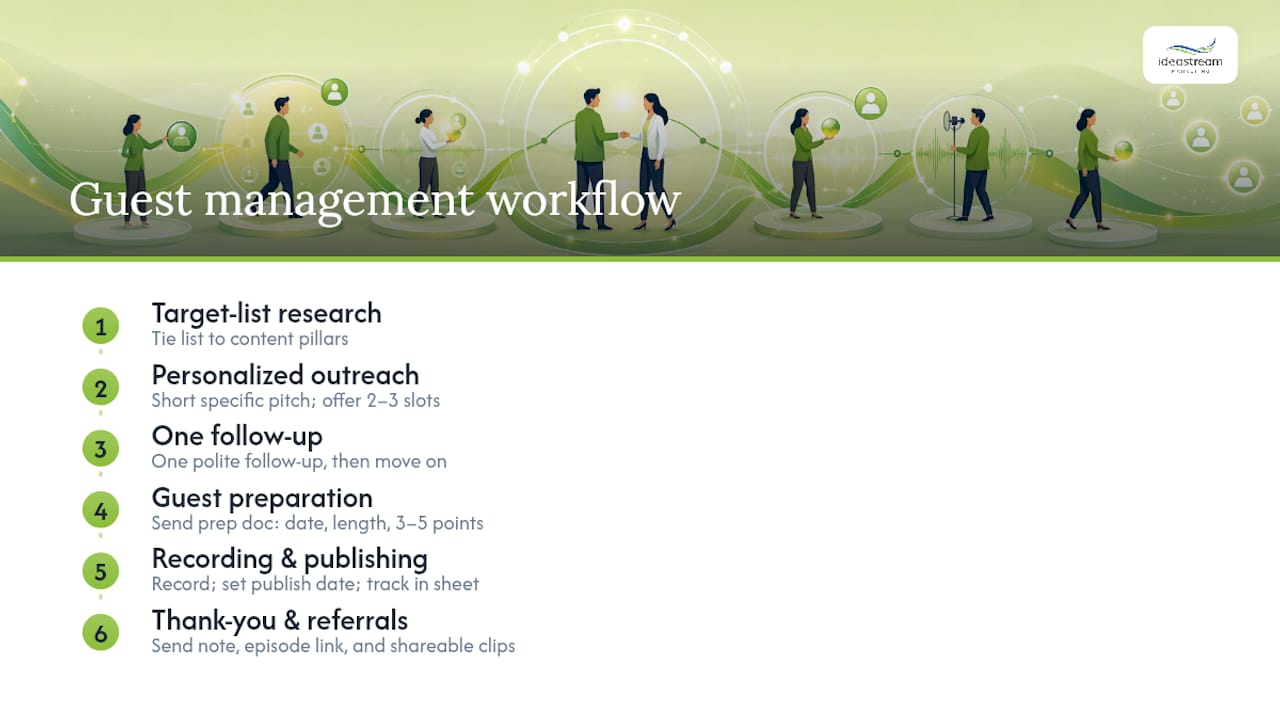
Start with a target list tied to your content pillars. If a pillar is “customer transformation stories,” your guest list should be actual clients, not random industry names. For thought-leadership pillars, look for people one or two connections away through LinkedIn or existing partners, since warm introductions convert far better than cold outreach emails.
Keep outreach short and specific: name the exact topic, explain why that guest specifically fits, and offer two or three recording windows up front instead of asking for their availability first. A templated email that still feels personal, mentioning their recent work or a specific opinion of theirs, gets far better response rates than a generic pitch.
Once a guest confirms, send a short prep document: recording date, expected length, three to five talking points (not a rigid script), and simple technical instructions for headphones and a quiet room. This single document eliminates most of the last-minute confusion that causes reschedules.
Build a lightweight tracking sheet with columns for outreach date, response, recording date, and publish date. Guests who go quiet after initial interest need one polite follow-up, then move on. Finally, always send a thank-you note with the published episode link and social clips they can share themselves. That habit turns one-time guests into repeat guests and occasional referral sources for your next round of outreach.
What Legal Considerations Apply to a Business Podcast?
Three legal issues come up on nearly every branded podcast: music, disclosure, and sponsorship.
Music rights are the most common mistake. Using a popular song without a license, even a few seconds as intro music, can get your episode muted or removed from platforms, or trigger a copyright claim. License intro and outro music through a royalty-free library or a licensed production music service, and keep a record of the license for every track you use.
Disclaimers and disclosures matter most when a podcast touches financial, legal, medical, or investment topics. If your show gives advice in a regulated area, add a spoken or written disclaimer clarifying the content is informational, not professional advice for the listener’s specific situation. This is standard practice across financial and health-adjacent podcasts and protects both the company and the listener.
Sponsorship disclosure applies the moment money or free product changes hands for a mention. The Federal Trade Commission expects clear, unambiguous disclosure when a segment is paid or sponsored, whether that’s a verbal “this episode is sponsored by” or a written note in the show notes. Vague language buried at the end of an episode description generally doesn’t meet that bar.
Podbean’s guidance on branded podcasts reinforces this directly: a company-owned show should be transparently identified as brand-produced from the first episode, not disguised as independent editorial content. Build a simple legal checklist into your production workflow so nobody has to remember these rules episode by episode.
How Much Does It Cost to Produce a Business Podcast?
Costs split into three tiers, and most companies underestimate the ongoing tier while overestimating the startup tier.
Startup costs are the smallest piece. A microphone per host, headphones, and basic room treatment can be handled for a modest one-time spend. Software for recording and editing ranges from free to a modest monthly fee depending on features.
Ongoing production costs are where budgets actually get tested. Editing time, whether in-house or outsourced, recurs every single episode. So does hosting, transcription, artwork updates, and the time spent booking and prepping guests. A weekly show with modest editing needs still requires several hours of production labor per episode when you add up recording, editing, clip-cutting, and publishing.
Growth-stage costs appear once the show proves its value and you want it to look and sound like a professional media product instead of a hobby project. That’s typically when companies bring in a dedicated studio, better acoustics, video capture for repurposing into social clips, and a producer who owns the calendar full time. This is also the point where many internal teams hit a wall: they can record an episode, but they can’t consistently turn it into the five or six pieces of content that make the effort pay off.
Budget conservatively for the first ten episodes, then revisit the numbers using real data on time spent and content produced, not guesses made before you’d recorded a single episode.
Who Should Own Each Part of a Business Podcast?
A podcast without assigned owners quietly dies around episode six, usually because everyone assumed someone else was booking the next guest.
At minimum, assign four roles, even if one person wears two hats early on:
- Executive sponsor: owns the business goal, approves topics, and reports results to leadership
- Producer: owns the calendar, books guests, and keeps episodes on schedule
- Host: conducts interviews or delivers solo commentary consistent with brand voice
- Editor/distributor: handles audio cleanup, publishing, and repurposing into clips and social content
Smaller companies often combine producer and host in one person, with editing outsourced. Larger organizations sometimes add a dedicated social media coordinator whose only job is turning long-form audio into short-form video for Instagram Reels, TikTok, and YouTube Shorts. Whatever the structure, write it down. A one-page responsibility chart prevents the single most common cause of podcast abandonment: nobody owning the unglamorous logistics between recording sessions.
How Do You Build Long-Term Audience Engagement Around a Podcast?
A podcast’s real value compounds over dozens of episodes, not the first five. Building that long-term audience means treating listeners as a community, not just a download count.
Consistency beats intensity. A biweekly show published reliably for a year builds more trust than a weekly show that goes dark for two months and restarts. Listeners learn your publish rhythm and build it into their routine, and breaking that rhythm repeatedly is what causes churn.
Invite listener participation once you have a baseline audience: a submitted question segment, a listener shoutout, or occasional live Q&A sessions on LinkedIn or Instagram tied to a recent episode. This turns passive listeners into active participants who feel some ownership over the show.
Track repeat listeners, not just total downloads, if your host platform supports it. A smaller group of loyal, recurring listeners who match your ICP is worth more than a large audience of one-time listeners who never return. Finally, keep surfacing your back catalog. An episode from eight months ago on a still-relevant topic can be re-promoted in an email or social clip and often performs as well as a new release, since most of your audience never heard it the first time.
How Does a Podcast Fit Into Your Broader Marketing Plan?
A podcast that lives in isolation from your other marketing efforts wastes most of its potential. The episodes you record should feed directly into content you’re already planning, not compete with it for attention.
Map each episode back to your existing content calendar. If your team publishes a monthly blog post on a specific theme, that same theme should show up as a podcast pillar, and the two should reference each other. A podcast interview with a client is also a testimonial asset, a case study source, and raw material for a brand story video. Treating the recording session as a single-use asset is the biggest missed opportunity in most branded podcasts.
Coordinate publish dates with your broader campaigns. An episode timed to launch alongside a product announcement or industry event gets a promotional lift the calendar would otherwise waste. Your SEO and content teams should also treat show notes and transcripts as real content, optimized for search, not an afterthought dumped into a description box. A tool built for content strategy planning can help validate which topics your audience is actually searching for before you commit a pillar to a full season.
Finally, loop your podcast data back into overall brand measurement. If your team already tracks branding performance across digital campaigns, podcast engagement and pipeline influence belong in that same report, not a separate spreadsheet nobody reviews.
An Agency’s View on What Actually Makes Business Podcasts Work
Most branded podcasts don’t fail because the idea was bad. They fail because production logistics quietly overwhelm a team that thought recording a conversation would be the easy part. Idea Stream Marketing’s in-house studio work with client shows surfaces the same three failure points over and over: guest scheduling collapses without a dedicated owner, remote audio fails without a local backup track, and cadence slips the moment the “exciting new project” energy wears off around episode five.
The teams that get real results treat every recording session as raw footage for a whole content system, not a single audio file. One interview becomes a full episode, three or four vertical clips for Instagram Reels and TikTok, a YouTube Short, a blog recap, and an SEO-optimized show page. That repurposing discipline, more than microphone quality, is what separates shows that build pipeline from shows that quietly stop publishing after a few months.
The uncomfortable truth: most in-house teams can produce episode one just fine. It’s episode fifteen where consistency, editing quality, and repurposing habits usually break down.
— Dean
Ready to Launch Your Business Podcast? Here’s How Idea Stream Marketing Helps
Idea Stream Marketing is the alternative to piecing together your podcast from a freelance editor, a separate social clipper, and an SEO consultant who’s never heard the episodes. Instead, one in-house team handles concept development, professional recording, editing, distribution setup, short-form repurposing, and the AI SEO work that gets your show pages found on Google.
Our studio work covers the full production chain: batch-recording sessions, sound treatment and editing, transcript and show-notes generation, directory submission, and cutting every episode into Reels, Shorts, and TikTok-ready clips your team can post the same week. We also build the measurement layer, tracking ICP match and pipeline influence, so leadership sees results beyond download counts, and we tie the show into your existing digital marketing and video strategy instead of treating it as a side project.
If you’re ready to stop guessing at equipment and editing software, schedule a consultation or book a studio session and get your first batch of episodes recorded with a team that already knows where branded podcasts usually break down.
Sources
- As podcast audiences broaden, so should advertiser engagement with listeners — Nielsen
- Branded Podcast: Definition, Benefits & Why Brands Invest — Podbean
- How to Start a Podcast in 2026: The Marketer’s Playbook — Neal Schaffer
- Branded Podcast Strategy: Build One That Actually Works — CoHost
FAQ
How Long Should a Business Podcast Episode Be?
Most branded podcasts run 20 to 40 minutes, long enough for a real conversation but short enough to finish during a commute or workout; interview formats can run slightly longer than solo commentary episodes.
How Many Episodes Should You Record Before Launching?
Batch-record three to five episodes before your launch date so you have a buffer against guest cancellations and can maintain a consistent publishing schedule from day one.
Do You Need Video for a Business Podcast?
Video isn’t required to start, but recording video alongside audio makes it far easier to repurpose episodes into Instagram Reels, YouTube Shorts, and TikTok clips, which is where much of a branded podcast’s promotional value comes from.
How Do You Get Sponsorship Disclosures Right?
Any paid or compensated mention needs a clear, unambiguous disclosure, either spoken in the episode or written in the show notes, rather than vague language buried at the end of a description.
What’s the Fastest Way to Get Professional Results Without an In-House Studio?
Working with an established production partner like Idea Stream Marketing shortens the learning curve considerably, since the recording workflow, editing standards, and repurposing pipeline are already built and tested across other branded shows.

