


October 16, 2026



TL;DR:
- Inbound event marketing relies on content, email, and peer referrals to attract and convert audiences without interruptive ads. Email marketing is the top channel, driving 57% of registrations with a four-week promotional window, while peer referrals offer three to five times higher conversion rates than paid ads. Planning content around the entire event lifecycle and using engagement technology like QR codes and AI photo booths boosts organic reach and long-term pipeline growth.
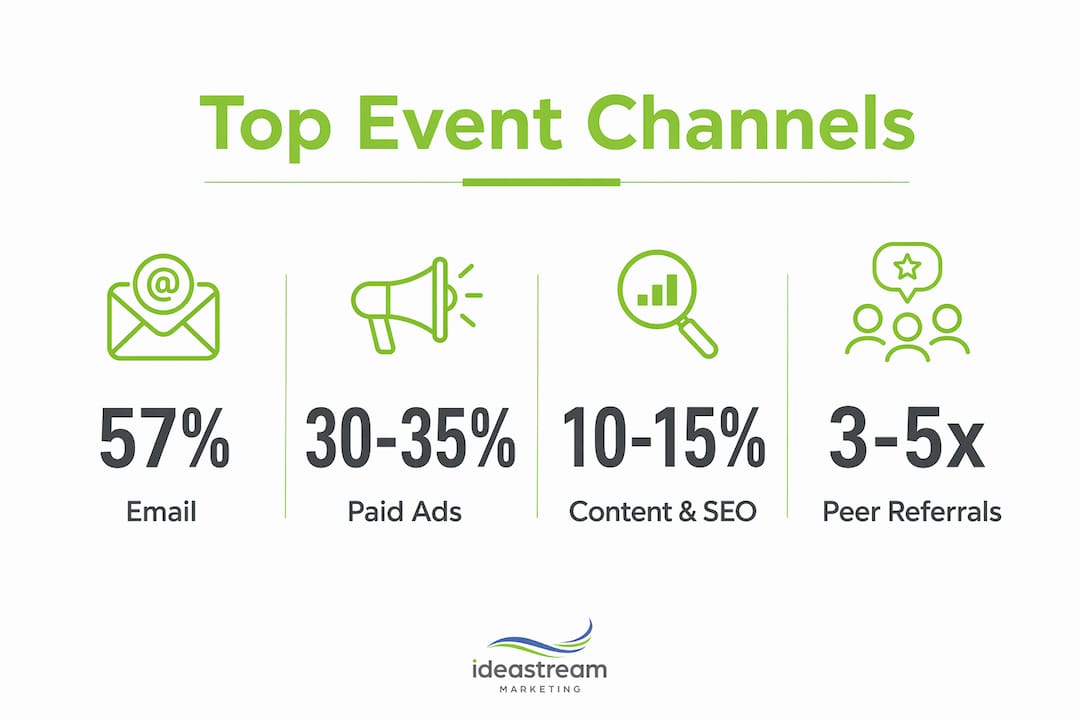
Inbound marketing for events is the practice of attracting and converting event audiences through content, digital channels, and peer advocacy rather than interruptive outreach. The industry term for this approach is “pull marketing,” and it covers email campaigns, content marketing, social media, referral programs, and engagement technology working together across the full event lifecycle. Email drives 57% of registrations when paired with a minimum four-week promotion window. Peer referrals convert at three to five times the rate of cold paid traffic. These numbers define where your budget and attention should go in 2026.
What are the best inbound marketing channels for events in 2026?
Email marketing is the single highest-performing channel for event registrations. A four-week promotion window is the recommended minimum, structured around early awareness, mid-phase nurturing, and late-phase urgency. Budget allocation for email typically runs 10–15% of total event marketing spend. That relatively small share produces the largest share of registrations, which tells you the channel punches well above its cost.
Paid digital advertising takes 30–35% of most event marketing budgets. It delivers scale and reach quickly, but paid ads suffer diminishing returns without organic content and advocacy channels running alongside them. Planners who rely on paid ads alone consistently see rising cost-per-registration as campaigns mature. The fix is not to cut paid spend but to build the organic and referral layers that make paid ads more efficient.
Content and SEO together account for another 10–15% of budget in well-structured event marketing plans. That investment builds organic discovery and positions your event as a thought leader in its category. Event listing sites, partner co-marketing, and branded creative assets round out the channel mix. Each of these drives registrations at a lower cost per acquisition than paid digital alone.
| Channel | Typical budget share | Relative effectiveness |
|---|---|---|
| Paid digital ads | 30–35% | High reach, diminishing returns solo |
| Email marketing | 10–15% | Highest registration conversion rate |
| Content and SEO | 10–15% | Long-term organic discovery |
| Peer referrals | Low direct cost | 3–5x conversion vs. cold traffic |
| Event listings and partners | Variable | Efficient cost per registration |
Pro Tip: Balance paid reach with organic content and referral programs. Paid ads fill the top of the funnel fast, but email and peer advocacy close registrations at a fraction of the cost.
How to design a content strategy that powers event marketing
Content is the event experience itself, not a promotional layer applied on top of it. Audiences expect content designed around how they actually consume information, not content forced into rigid agenda formats. This shift changes how you plan every asset, from the first teaser post to the final post-event recap. When you treat content as the core product, every piece of marketing becomes more relevant and more shareable.

Pre-event content: build anticipation and authority
Pre-event content should educate, not just announce. Thought leadership articles, speaker interviews, and “why this event matters” narratives attract the right attendees and prepare them to engage deeply once they arrive. This content also feeds your SEO and social media channels, building organic reach weeks before the event date. Plan content assets per session topic, not per speaker name. That approach gives you more variety and reaches more audience segments.
During-event content: capture and amplify in real time
During the event, your job is to capture authentic moments and distribute them immediately. Real-time social posts, live session quotes, and attendee reactions all build social proof while the event is still happening. AI photo booths and real-time surveys turn attendees into co-creators, generating user-generated content that carries more credibility than brand messaging. QR codes at session exits make it easy for attendees to share content and submit feedback without friction. You can also explore audience engagement strategies that align content capture with attendee behavior patterns.
Post-event content: extend the lifecycle and drive pipeline
Post-event content is where most planners leave money on the table. Session recaps, highlight videos, survey results, and follow-up announcements keep the conversation alive for weeks after the event ends. Sending post-event content within 24 hours is the most effective window for attendee conversion. Repurpose each session into multiple asset types: a blog post, a short social clip, a podcast episode, and an email summary. That single session now reaches four different audience segments across four different channels.
Content types and their primary business goals:
- Session recap articles: Drive organic search traffic and establish thought leadership
- Highlight videos: Boost social sharing and build brand awareness for future events
- Attendee testimonial clips: Create social proof that converts fence-sitters into registrants
- Post-event surveys: Collect data that improves future programming and demonstrates responsiveness
- Email follow-up sequences: Nurture warm leads and drive early-bird registrations for the next event
Pro Tip: Plan your content capture schedule before the event, not during it. Assign a team member to each session specifically for content collection, so nothing gets missed in the moment.
How can peer referrals amplify your event’s inbound results?
Peer referral marketing is the practice of activating existing attendees and community members to recruit new registrants through personal recommendation. Peer referrals convert at 3–5x the rate of cold paid traffic. That gap exists because people trust recommendations from colleagues and peers far more than they trust brand advertising. For event planners, this means your existing attendee list is one of your most valuable marketing assets.
Advocacy programs work best when they give participants clear incentives and easy tools to share. Social sharing leaderboards, branded sharing kits, and tracked landing pages all make it simple for advocates to spread the word and for you to measure the impact. Authentic user-generated content generated through advocacy carries stronger social proof than any paid creative. You can deepen this effect by pairing referral programs with social proof tactics that amplify attendee voices across digital channels.
Here is a practical process to launch an advocacy campaign for your next event:
- Identify your top advocates. Pull your most engaged past attendees from email open rates, session attendance data, and social interactions.
- Build a branded sharing kit. Create ready-made social posts, email templates, and graphics that advocates can share in under two minutes.
- Set up tracked landing pages. Give each advocate a unique registration link so you can measure exactly how many registrations each person drives.
- Create a visible leaderboard. Display top advocates publicly on your event website or in a community channel. Recognition motivates participation more reliably than cash incentives alone.
- Reward and recognize. Offer VIP access, speaking opportunities, or public acknowledgment to your top advocates. These rewards cost little and generate significant goodwill.
- Measure and report back. Share results with your advocates after the event. Showing them their impact builds loyalty and sets up your next campaign.
What engagement technologies improve inbound marketing for events?
QR codes are now used by 47% of event professionals for content sharing and lead capture at session exits and sponsor booths. That adoption rate reflects a broader shift: attendees expect digital touchpoints woven into the live experience, not bolted on as an afterthought. The best engagement technology does two things at once. It creates a better attendee experience and generates data and content that extends the event’s marketing value.
Modern engagement tools that deliver the highest content and lead generation value include:
- AI photo booths: Generate branded, shareable images that attendees post organically, extending event reach without additional ad spend
- Real-time survey tools: Capture attendee sentiment during sessions, giving you data to act on immediately and content to share publicly
- QR code stations: Place at session exits and sponsor areas to collect contact information and distribute digital content without manual data entry
- Live polling integrations: Embed polls into presentations to increase participation and create shareable data points from the session itself
- Digital event apps: Centralize the schedule, networking, and content sharing in one place, making it easier to track engagement across the full event
Interactive technologies empower attendees as co-creators, dramatically extending the event’s organic reach through authentic content. That co-creator dynamic is what separates a forgettable event from one that generates leads and registrations for months afterward. The AI-enhanced marketing tools available today make it possible to build this infrastructure without a large technical team.
Pro Tip: Integrate engagement technology into your event design from day one. Retrofitting tech into a finalized agenda always limits what you can capture and share.
Key takeaways
Inbound event marketing works when email, content, peer advocacy, and engagement technology operate as a unified system across the full event lifecycle, not as isolated tactics.
| Point | Details |
|---|---|
| Email leads registrations | Email drives 57% of event registrations; allocate 10–15% of budget and start four weeks out. |
| Peer referrals outperform paid ads | Referral traffic converts 3–5x better than cold paid traffic, making advocacy your highest-ROI channel. |
| Content spans the full lifecycle | Plan pre-event, during-event, and post-event content assets before the event date arrives. |
| Post-event timing is critical | Send session recaps and follow-ups within 24 hours to capture attendees at peak engagement. |
| Tech creates content and data | QR codes, AI photo booths, and live polls generate UGC and lead data simultaneously. |
What I’ve learned about events that most planners overlook
Most event planners treat the event date as the finish line. The registration numbers are in, the venue is booked, and the agenda is set. Then the event happens, and the marketing stops. That is the single most expensive mistake in event marketing.
The two weeks after an event are where the real conversion opportunity lives. Announcing your next event within this window to a warm, engaged audience can deliver 15–25% early-bird conversion rates. Those are people who just experienced your event, trust your brand, and are primed to commit. Waiting even a month cuts that conversion rate significantly as the emotional momentum fades.
The second thing I see planners get wrong is over-investing in paid ads without building the organic and advocacy layers that make paid spend efficient. Paid digital fills the funnel fast, but it does not build trust or community. Email nurture and peer referrals do both, at a fraction of the cost per registration. The planners who consistently sell out their events are the ones who treat their attendee list as a community, not a contact database.
The third lesson is about content capture. Most events produce a fraction of the content they could. A single full-day conference can generate 20 to 30 distinct content assets if you plan for it. That content feeds your SEO, your email sequences, your social channels, and your next event’s promotion. B2B event success is measured by pipeline per registration, not raw attendance. Content is what converts registrants into pipeline. Plan it from day one, capture it deliberately, and distribute it fast.
— Dean
How Idea Stream Marketing helps event planners build real marketing momentum
Event marketing works best when professional content and digital strategy work together from the start. At Idea Stream Marketing, we produce event video content and digital marketing campaigns built specifically to drive registrations, engagement, and long-term brand visibility.
Our team handles everything from pre-event promotional videos and social content to post-event highlight reels and email follow-up sequences. We combine professional video production with SEO, social media strategy, and AI-powered marketing to make sure every piece of content you create keeps working long after the event ends. If you want to build an event marketing program that generates real pipeline, we are ready to help. Contact us to talk through your next event.
FAQ
What is inbound marketing for events?
Inbound marketing for events is a pull-based approach that attracts attendees through content, email, social media, and peer referrals rather than interruptive advertising. It focuses on creating value at every stage of the event lifecycle to drive registrations and long-term engagement.
Which channel drives the most event registrations?
Email marketing drives 57% of event registrations and delivers the highest return relative to its budget share of 10–15%. A structured four-week promotion window with early awareness and late urgency phases produces the best results.
How do peer referrals improve event marketing ROI?
Peer referrals convert at three to five times the rate of cold paid traffic, making them the highest-ROI channel in event promotion. Branded sharing kits, tracked landing pages, and public leaderboards are the most effective tools for activating referral campaigns.
When should I send post-event content to attendees?
Send session recaps, recordings, and surveys within 24 hours of the event ending. That window captures attendees at peak engagement and is the most effective time to announce your next event and drive early-bird registrations.
How does engagement technology support inbound event marketing?
QR codes, AI photo booths, and real-time survey tools generate user-generated content and lead data simultaneously. These tools turn attendees into co-creators, extending the event’s organic reach and social proof well beyond the event date itself.

