



October 21, 2026




TL;DR:
- Creative media uses artistic expression and technology to produce content that engages audiences. It includes video, photography, audio, graphic design, animation, and interactive formats. Professionals need skills in creativity, technical production, digital marketing, and AI tools to succeed.
Creative media is defined as the strategic use of artistic expression and media technology to produce content that communicates messages and engages audiences across platforms. The industry term most professionals use is creative media production, which covers everything from branded video and podcast audio to graphic design and interactive digital experiences. Understanding what is creative media matters whether you work in marketing, education, or entertainment, because content shapes decisions at every stage of the audience journey. Idea Stream Marketing works with businesses nationwide to produce exactly this kind of content, from Long Island to major markets across the United States.
What is creative media and what forms does it take?
Creative media is storytelling through artistic and technological methods that produce visual and auditory experiences designed to engage audiences and inspire action. It transforms ideas into brand narratives and media experiences that work across channels. The definition of creative media is broad by design, because the field covers a wide spectrum of formats and disciplines.
The most common types of creative media include:
- Video content:Brand films, commercials, social reels, explainer videos, and documentaries
- Photography: Product photography, editorial shoots, and visual brand assets
- Audio and podcasts: Audio production builds intimacy and trust with audiences who consume content while multitasking
- Graphic design: Logos, infographics, social media graphics, and print collateral
- Animation: Motion graphics, 2D and 3D animation for explainer content and advertising
- Interactive media: Web experiences, AR filters, interactive ads, and gamified content
Each format uses a different combination of creative skill and technical production. A podcast requires audio engineering and narrative structure. A brand film requires cinematography, scripting, and post-production editing. These formats combine artistic tools with technology to tell stories and influence how audiences think and act. The rise of social platforms has accelerated demand for short-form video and audio content in particular, making creative media production a core business function rather than a nice-to-have.
Pro Tip: When choosing a format, match the medium to where your audience already spends time. A B2B audience on LinkedIn responds to infographics and short video. A consumer audience on Instagram responds to reels and photography.
How does the creative media production process work?
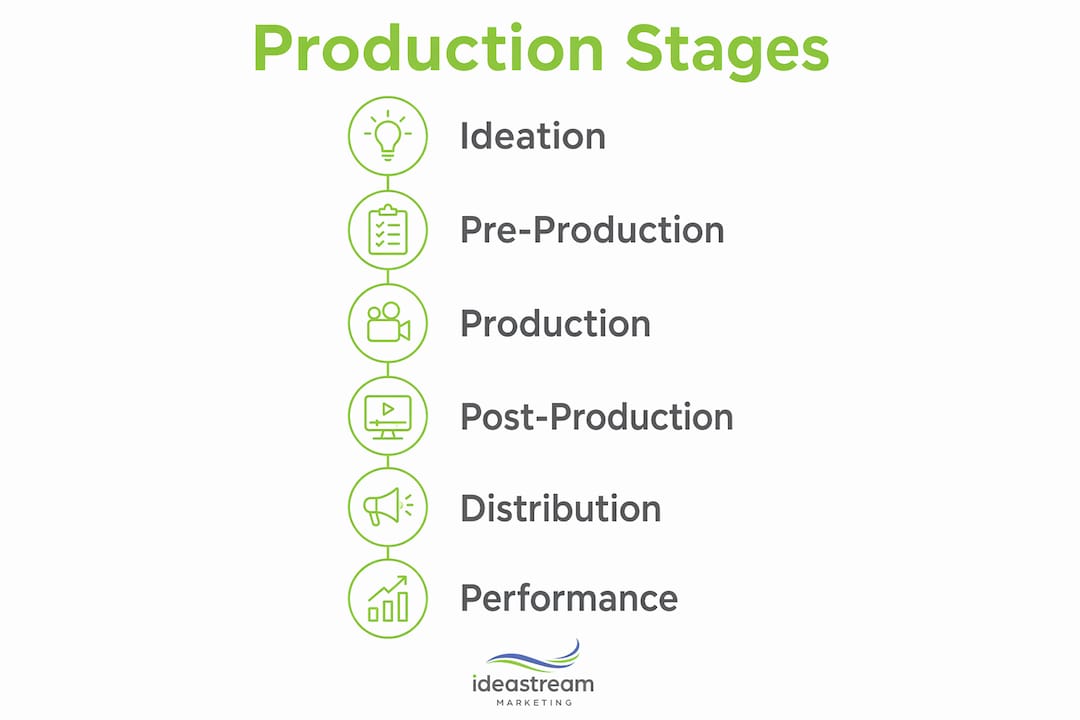
Creative media production follows a structured 6-step cycle from ideation through performance analysis. Each stage builds on the last, and skipping any one of them creates gaps that show up in the final product.
| Stage | Key Activities |
|---|---|
| Ideation | Concept development, audience research, brief creation |
| Project planning | Timeline setting, resource allocation, team assignments |
| Production | Filming, recording, designing, writing, and building assets |
| Post-production | Editing, color grading, sound mixing, quality review |
| Launch | Distribution across channels, scheduling, paid amplification |
| Performance analysis | Metrics review, audience feedback, optimization for future work |
One distinction that trips up many teams is the difference between creative production and creative operations. Creative operations manage workflows and resources, while creative production handles the actual execution of content. Both functions are necessary. When creative operations are weak, even talented production teams miss deadlines and produce work that misses the brief.
Structured production processes improve efficiency and keep creative work aligned with marketing goals. A team that skips the planning stage often discovers mid-production that the concept does not match the channel requirements or the audience’s expectations. That costs time and budget.
Pro Tip: Build a creative brief template your team uses on every project. Include the audience, the goal, the channel, the tone, and the success metric before a single asset goes into production.
What is the role of creative media in marketing, education, and entertainment?
The role of creative media differs by sector, but the core function is the same: communicate a message in a way that holds attention and drives a response.
Creative media in marketing
Marketing is the most visible application of creative media production. Brands use video, graphic design, audio, and interactive content to tell their story, build recognition, and convert audiences into customers. A law firm that produces a short video explaining a complex legal process builds trust faster than a text-only FAQ page. A restaurant that posts consistent, well-lit photography on social media creates appetite and drives reservations. The role of creative media in marketing is to make abstract value concrete and visible.
Social media platforms have made creative media the primary language of brand communication. Audiences scroll past text and stop for video. They share images and save audio clips. Brands that produce consistent, high-quality creative content build audiences that competitors cannot easily replicate.
Creative media in education
Educational institutions and corporate training programs use creative media to make complex subjects accessible. Animated explainer videos break down scientific processes. Interactive web modules let learners test knowledge in real time. Podcast series give students access to expert interviews they can replay. The shift toward multimedia learning has made creative media production a core skill for educators and instructional designers alike.
Creative media in entertainment
Film, music, gaming, and live events all depend on creative media production at a professional level. A film production team uses the same 6-step cycle as a marketing agency, from concept development through distribution and audience analysis. Podcast networks build loyal audiences through consistent audio storytelling. Immersive experiences like AR-enhanced concerts blend physical and digital creative media into a single audience moment. Entertainment sets the standard for production quality that audiences then expect from brands and educators.
What skills do creative media professionals need?
Creative media professionals need an interdisciplinary skill set that spans creativity, technical production, and strategic thinking. Degree programs in creative media production typically run 3–4 years and now include AI-assisted workflows and digital storytelling as core competencies alongside ethics and social impact analysis.
The skills that matter most in practice include:
- Creative direction: The ability to develop a concept and guide it through execution
- Technical production: Proficiency with cameras, audio equipment, editing software, and design tools
- Audience analysis: Understanding who the content is for and what motivates them
- Digital marketing literacy: Knowing how content performs across channels and why
- Project management: Keeping production on schedule and within budget
- AI tool fluency: Using AI-assisted workflows to accelerate production without losing creative quality
Successful professionals blend technical creativity with entrepreneurial and marketing skills. They adapt quickly when platforms shift or audience behaviors change. The professionals who stall are those who master one tool and stop learning.
Pedagogical research identifies problem-based learning and interdisciplinary collaboration as the most effective preparation for creative media careers. Working across disciplines, where a designer collaborates with a strategist and a data analyst, produces better creative work than siloed specialization.
Pro Tip: If you are building a creative media career, take on projects outside your primary discipline. A video editor who understands SEO produces content that ranks. A designer who understands conversion rate optimization produces assets that sell.
What emerging trends are shaping the future of creative media?
AI-assisted workflows are the most significant shift in creative media production right now. AI tools now handle tasks like transcription, rough cut editing, image generation, and copy drafting, freeing creative teams to focus on strategy and storytelling. AI transforms digital marketing workflows in ways that compress production timelines without reducing quality.
Immersive media formats are gaining ground. Augmented reality filters on social platforms, 360-degree video, and spatial audio experiences give audiences a sense of presence that flat content cannot match. Brands in hospitality, real estate, and retail are already using these formats to let audiences experience products before purchasing.
Audience behavior is also shifting the formats that perform. Short-form vertical video dominates mobile consumption. Audio content continues to grow as audiences multitask. Interactive content, where viewers make choices that shape the narrative, is moving from experimental to mainstream. Interactive AI video ads represent one of the fastest-growing formats in paid media right now.
Sustainability is entering the production conversation too. Brands and agencies are rethinking travel-heavy shoots, excessive reshoots, and wasteful production cycles. Efficient workflows that produce more with less are becoming a competitive advantage, not just an ethical preference.
Key Takeaways
Creative media production is most effective when structured workflows, audience-centered strategy, and technical skill work together across every stage from ideation to performance analysis.
| Point | Details |
|---|---|
| Definition of creative media | Creative media combines artistic expression and technology to produce content that engages audiences and drives action. |
| Six-stage production cycle | Every effective creative media project moves through ideation, planning, production, post-production, launch, and analysis. |
| Role across industries | Marketing, education, and entertainment each use creative media differently but share the same goal: hold attention and communicate value. |
| Skills professionals need | Top performers blend creative direction, technical production, digital marketing literacy, and AI tool fluency. |
| Emerging trends | AI workflows, immersive formats, and short-form vertical video are reshaping how creative media is produced and consumed. |
Why strategy beats polish every time
Here is what I have seen repeatedly working with brands on creative media production: the teams that obsess over production quality while ignoring strategy consistently underperform the teams that start with a clear audience insight and build backward from there.
High-quality production is ineffective if it does not communicate value in the first few seconds. Audiences do not reward effort. They reward relevance. A beautifully shot brand film that opens with a 10-second logo animation loses the audience before the story begins. A rough-cut testimonial video that opens with a specific, relatable problem holds attention because it earns it.
Attention is the real currency in digital media. Every creative decision, from the first frame of a video to the subject line of an email, is a bid for that attention. The brands that win are not the ones with the biggest production budgets. They are the ones that understand their audience well enough to say the right thing at the right moment in the right format.
The other mistake I see is treating creative operations as an afterthought. Workflow management, briefing processes, and approval systems are not administrative overhead. They are what allow creative teams to produce consistently good work at scale without burning out. The best creative media teams I have worked with treat operations as seriously as they treat craft.
— Dean
How Idea Stream Marketing brings creative media to life for your brand
Idea Stream Marketing operates an in-house media studio on Long Island that produces branded video, podcasts, photography, social media campaigns, and commercial content for clients across the United States. Every project starts with audience research and a clear brief before a single camera rolls or a single graphic gets designed.
The agency pairs professional video production with AI SEO services so that creative assets do not just look good. They rank, reach the right audiences, and generate measurable results. Whether you need a full creative media production strategy or a single high-impact campaign, Idea Stream Marketing builds content that earns attention and drives growth. Schedule a consultation to see how we approach creative media for your industry.
FAQ
What is the definition of creative media?
Creative media is the use of artistic and technological methods to produce visual, audio, and interactive content that communicates messages and engages audiences. It spans formats including video, photography, animation, graphic design, and podcasts.
What is creative media production?
Creative media production is the structured process of turning a creative concept into a finished media asset, following stages that include ideation, planning, production, post-production, launch, and performance analysis.
What are the main types of creative media?
The main types include video, photography, audio and podcasts, graphic design, animation, and interactive digital media. Each format uses different tools and skills to reach and engage specific audiences.
How is creative media used in marketing?
Brands use creative media in marketing to tell their story, build recognition, and convert audiences into customers through video, social content, graphic design, and audio campaigns distributed across digital channels.
What skills do you need for a creative media career?
Creative media professionals need creative direction, technical production skills, audience analysis, digital marketing literacy, project management, and fluency with AI-assisted production tools.

