



October 16, 2026



TL;DR:
- Over 97% of homebuyers begin their property search online, making digital presence essential for success. AI-enhanced visuals, consistent geographic farming, and multi-channel promotion significantly boost property visibility and engagement. Building trust through relationships remains vital, even as digital tools augment real estate marketing efforts.
Over 97% of homebuyers start their property search online. That single number reshapes every conversation about real estate marketing. If your listings, brand, or outreach are not visible where buyers actually spend their time, you are simply not in the game. This guide covers the property marketing strategies that actually move the needle in 2026, from AI-powered visuals and geographic farming to lead generation automation and advertising compliance. Expect specific, practical frameworks you can apply whether you manage one listing or a full portfolio.
Table of Contents
- Key takeaways
- Real estate marketing fundamentals for 2026
- AI-driven visual marketing for property listings
- Geographic farming with digital and social strategies
- Legal and ethical rules for real estate advertising
- Maximizing lead generation through digital channels
- My honest take on technology vs. relationships
- How Ideastreammarketing can power your property marketing
- FAQ
Key takeaways
| Point | Details |
|---|---|
| Digital presence is non-negotiable | Over 97% of buyers begin online, so your digital presentation defines first impressions. |
| AI visuals change buyer perception | Virtual staging and AI photography enhancements drive more scheduled viewings per listing. |
| Geographic farming needs consistency | The 3-3-3 rule across three channels for three months produces measurable local results. |
| Video generates far more exposure | Listings with video receive 87% more views, making it a core part of any property campaign. |
| Compliance protects your business | Fair Housing requirements and brokerage disclosure rules must be built into every ad you run. |
Real estate marketing fundamentals for 2026
The classic marketing mix — product, price, place, and promotion — still applies in real estate. The definitions have just shifted significantly.
Your “product” is no longer just the physical property. It is the digital representation of that property: the photos, the video walkthrough, the written description, and the first six seconds of a social media Reel. Buyers form strong impressions before they ever schedule a showing. If those digital assets underdeliver, the property does too, regardless of its actual condition.
“Price” now means transparency and speed. Buyers expect to find pricing data instantly. Holding back information, or using vague ranges, signals friction. The agents who win are the ones whose listings communicate value clearly and immediately across every platform.
“Place” is now a combination of physical location and digital distribution. Your MLS listing is the starting point, not the finish line. The most effective property marketing strategies extend to Google search, Instagram, YouTube, email lists, and local community platforms all at once.
“Promotion” has become a multi-channel commitment, not a single activity. Here is what a well-structured promotional approach looks like in practice:
- High-quality visual assets including professional photography, drone footage, and virtual tours
- Platform-specific social content tailored for Instagram, TikTok, and Facebook audiences
- Email campaigns targeting past clients, prospects, and local investor lists
- Paid digital advertising through Google Ads and social platforms with geo-targeting
- Community presence through local events, sponsorships, and neighborhood content
Pro Tip: Before launching any listing campaign, audit your digital touchpoints. A listing with inconsistent photos, a weak description, and no video is leaving views on the table before the first buyer ever clicks.
AI-driven visual marketing for property listings
Generative AI has fundamentally changed what real estate photography can do. It has shifted from simple documentation to what experts are calling a simulation layer for listings. That is not just a technical upgrade. It changes what buyers see, feel, and decide.
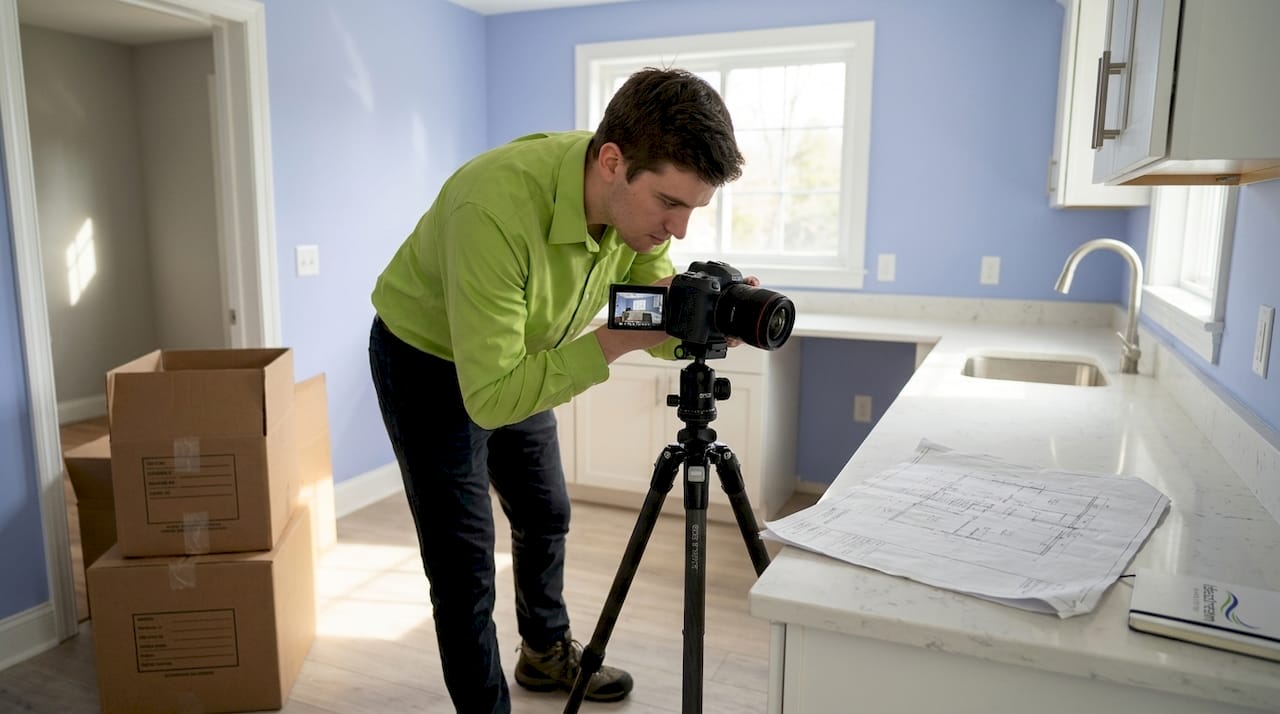
The practical capabilities now available to agents and investors include virtual staging of empty rooms, object removal to declutter occupied spaces, lighting enhancement for interiors shot on cloudy days, and sky replacement for exterior shots. Each of these tasks used to require physical staging, professional lighting rigs, or reshoots. Today they take minutes.
The impact on buyer behavior is measurable. When buyers can see a furnished, well-lit version of a property, they connect emotionally with the space instead of trying to imagine it. More emotional connection means more scheduled viewings, and more viewings mean faster sales.
| Visual technique | Traditional cost | AI-enhanced cost | Time savings |
|---|---|---|---|
| Full room staging | $1,500–$5,000 | $50–$200 per room | Days to weeks |
| Sky replacement | Reshoot required | Minutes in software | Same day |
| Object/clutter removal | Manual editing | Automated in seconds | Hours |
| Lighting correction | Professional reshoot | AI batch processing | Same session |
Drone photography helps properties sell 68% faster by showcasing full property features and surroundings. Combine drone footage with AI-enhanced ground-level photography and you have a visual package that beats most competing listings on first impression alone.
Building an efficient workflow matters here. A repeatable process that moves from raw photos to AI-enhanced finals to platform-optimized versions keeps your production time low and quality high. Agents who invest in this process early gain a competitive edge that compounds over every listing.
Authenticity still matters. AI-enhanced visuals must represent the property accurately. Misrepresentation is not just an ethical issue. It creates buyer distrust when the showing does not match the listing, which costs you time and damages your reputation.
Pro Tip: Always disclose when images have been digitally staged or enhanced. A simple “virtually staged” caption builds trust with buyers and keeps you on the right side of advertising ethics.
Geographic farming with digital and social strategies
Geographic farming is one of the most proven property marketing strategies in real estate. The concept is straightforward. You choose a specific neighborhood or area, you market consistently to it, and over time you become the go-to agent for that community. The execution has changed significantly in 2026.
Traditional farming relied on postcards, flyers, and door hangers. Those still work. But video marketing reduces cost per impression dramatically compared to traditional mailers while increasing engagement. The smartest agents now blend direct mail with hyper-local video content to hit their farm area from multiple directions.
The framework that separates consistent results from wasted effort is the 3-3-3 rule. According to geographic farming research, you need to reach your farm area three times per month, across three different channels, for at least three consecutive months before you start seeing measurable results. Stopping at month two means throwing away everything you built in months one and two.
Here is how to structure a modern farming approach:
- Select your farm area carefully. Target 250 to 500 households with a high turnover rate, ideally above 6% annually. Lower turnover means fewer listing opportunities and a longer payback timeline.
- Set up your three channels. A typical effective combination is direct mail, local Instagram Reels, and a neighborhood-focused email newsletter.
- Produce hyper-local video content. Short videos covering local market updates, neighborhood events, and recent sales build familiarity and trust faster than any postcard can.
- Use geo-targeted paid ads. A modest monthly budget targeting your specific zip code or neighborhood on Facebook and Instagram extends your reach beyond your organic following.
- Commit to at least 12 months. Geographic farming requires a 12 to 24 month commitment before word-of-mouth referrals start compounding. Referrals account for 42% of seller client acquisitions, so patience here pays real dividends.
| Farming tactic | Average cost per impression | Engagement level | Time to results |
|---|---|---|---|
| Direct mail postcards | Moderate | Low | 6–12 months |
| Local social media video | Low | High | 3–6 months |
| Geo-targeted paid ads | Low to moderate | Medium to high | 1–3 months |
| Door-to-door canvassing | High (time cost) | Very high | 3–9 months |
Legal and ethical rules for real estate advertising
Real estate advertising operates under a specific legal framework, and the penalties for getting it wrong are not minor. Understanding the rules protects your license, your clients, and your reputation.
The federal Fair Housing Act prohibits discriminatory language in any marketing material. This covers more than the obvious violations. It includes subtle word choices like describing a neighborhood’s demographic character, using phrases that imply preference for certain buyer types, or running paid ads with targeting settings that exclude protected classes. Every ad you run, whether it is a printed flyer or a Facebook post, must comply.
Real estate ads must avoid discriminatory language and include required brokerage information under both federal and state law. Most agents know the first part. Many underestimate the second. Every public-facing ad, including social media posts, must display your brokerage name in a way that is clear and conspicuous.
Key compliance points to build into every campaign:
- Include brokerage disclosures on all marketing materials, digital and print alike
- Register all trade names used in advertising with your state real estate commission before using them publicly
- Obtain written seller consent before any pre-marketing or “coming soon” promotions
- Follow MLS cooperation rules, including the requirement to submit listings within one business day of public marketing under the MLS Clear Cooperation Policy
- Review all AI-generated copy for discriminatory language before publishing, since automated tools can produce non-compliant phrasing without triggering obvious flags
Pro Tip: Create a simple pre-publish checklist for every listing campaign. Include brokerage disclosure, Fair Housing language review, seller consent confirmation, and MLS submission status. A two-minute check prevents months of headaches.
Maximizing lead generation through digital channels
Generating leads is where real estate marketing becomes measurable. The agents and investors who grow consistently treat digital marketing for real estate as a system, not a collection of tactics.
Local SEO is the foundation most professionals underinvest in. Hyper-local content creates authority that large national portals simply cannot replicate. Writing content specifically about your local market, neighborhoods, school districts, and community developments positions you as the area expert in search results where buyers are actively looking.
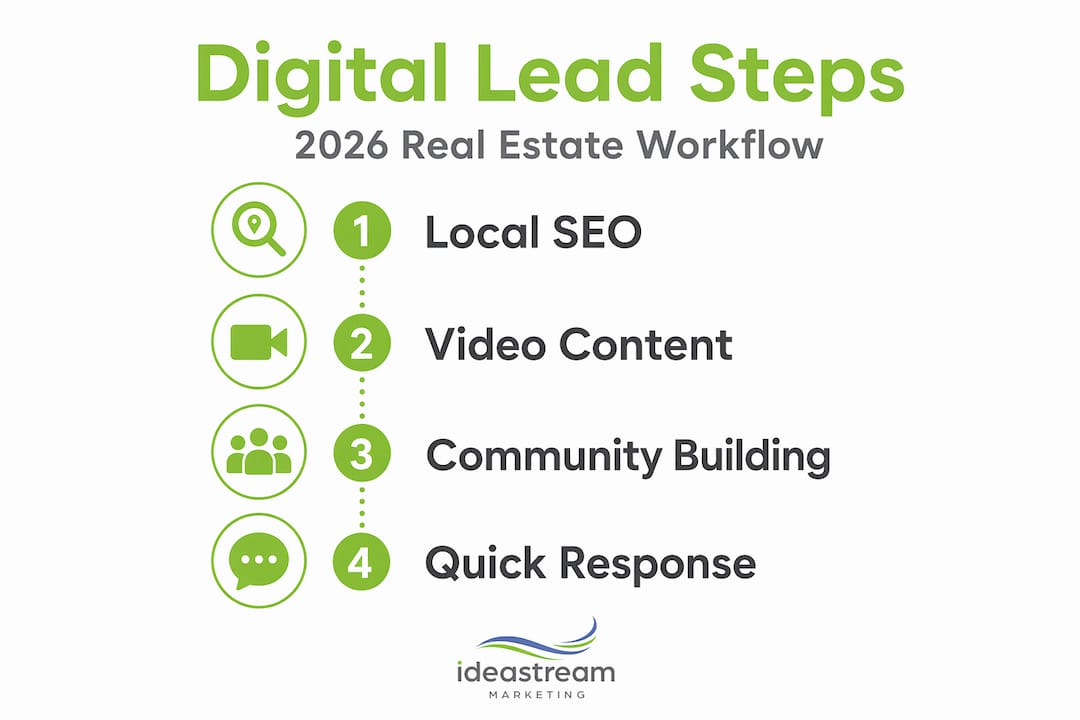
Video is the most powerful real estate lead generation tool available right now. Listings with video receive 87% more views than those without, and virtual tours pre-qualify buyers before showings, which saves everyone time. A practical video-led approach combines listing walkthroughs, client testimonials, and local market updates distributed across YouTube, Instagram, and your website.
Here is a proven digital lead generation sequence:
- Drive traffic through local SEO, social media content, and paid ads targeting your specific market area.
- Capture leads with optimized landing pages that offer genuine value. Property valuation tools, local market reports, and buyer guides all convert well.
- Nurture automatically using email workflows triggered by how each lead interacted with your site. Someone who downloaded a buyer’s guide needs different follow-up than someone who requested a valuation.
- Qualify with CRM data by tracking engagement scores before committing your personal time to outreach. Lead generation best practices consistently show that tiered follow-up outperforms mass outreach in conversion rates.
- Measure and adjust. Track cost per lead, lead-to-showing rate, and showing-to-close rate. Knowing which channel produces the most closings tells you exactly where to put more budget.
Social media platforms like Instagram and TikTok work particularly well for real estate social media community building when the content feels local and personal rather than corporate. Neighborhood spotlights, behind-the-scenes listing prep, and quick market updates consistently outperform polished promotional posts.
Pro Tip: Set up a simple automated text response for every new lead that comes through your website within five minutes. Speed of response is the single biggest factor in whether a cold lead becomes a conversation.
My honest take on technology vs. relationships
I’ve worked with enough real estate professionals to see a clear pattern. The ones who lean hardest into every new tech tool, at the expense of personal connection, hit a ceiling. And the ones who resist digital tools entirely keep losing listings to agents half their age who close deals faster.
What I’ve actually learned is that technology creates reach, but relationships create trust. And in real estate, trust is what sells.
I’ve seen agents pour money into AI-enhanced listing photos, social campaigns, and automated follow-up sequences. Those systems work. But when a seller calls to decide who gets their listing, they almost always choose the agent they know personally. That 42% referral rate is not a coincidence. It reflects something deeper about how people make high-stakes decisions.
My advice: use every digital tool available to you, but do not let automation replace the conversations that build genuine loyalty. Use your CRM to remember what matters to each client. Send a handwritten note after a close. Show up at local events your farm area cares about. The agents who blend consistent digital presence with real human connection are the ones I see winning consistently in competitive markets.
Early AI adopters do gain a real advantage right now, while the gap between tech-forward and tech-resistant agents is still wide. That window will close. Start building your digital systems today, and keep building your relationships alongside them.
— Dean
How Idea Stream Marketing can power your property marketing
If you are serious about real estate lead generation and want to build a digital presence that produces consistent results, Ideastreammarketing brings the full capability stack under one roof.
Our team specializes in AI-powered SEO designed to help real estate professionals rank for the local and neighborhood-specific searches that actually convert. We also manage social media campaigns built specifically for community engagement and geo-targeted paid advertising. For agents who want professional video content that showcases listings and builds market authority, our in-house studio handles everything from listing walkthroughs to branded market update series. Whether you are building your first digital system or scaling an established real estate brand, we offer a customized approach grounded in data and local market understanding. Schedule a consultation and let’s build a strategy that fits your market.
FAQ
What is the most effective real estate marketing strategy in 2026?
Combining local SEO, video content, and geographic farming produces the most consistent results. Listings with video receive 87% more views, making video a non-negotiable part of any effective campaign.
How long does geographic farming take to produce results?
Geographic farming requires a 12 to 24 month commitment to a defined area of 250 to 500 households. Using the 3-3-3 rule across three channels monthly accelerates recognition and speeds up referral generation.
What are the main legal requirements for real estate advertising?
Agents must include brokerage disclosures on all marketing materials, avoid discriminatory language under the Fair Housing Act, and submit listings to the MLS within one business day of public marketing under the Clear Cooperation Policy.
How does AI improve real estate marketing for property listings?
AI tools enable virtual staging, object removal, and lighting correction that make listings more visually compelling without costly physical staging. These enhancements directly increase the number of scheduled viewings per listing.
Why does local SEO matter more than national portal listings?
Hyper-local content creates search authority that national real estate portals cannot match at the neighborhood level. Agents who publish specific, locally-focused content rank for the searches serious local buyers actually use.

