



October 16, 2026




TL;DR:
- Strong branding enhances digital campaign efficiency by building recognition and trust that improve paid media performance.
- Integrating brand and performance marketing with a 60/40 budget split amplifies long-term growth and short-term conversions.
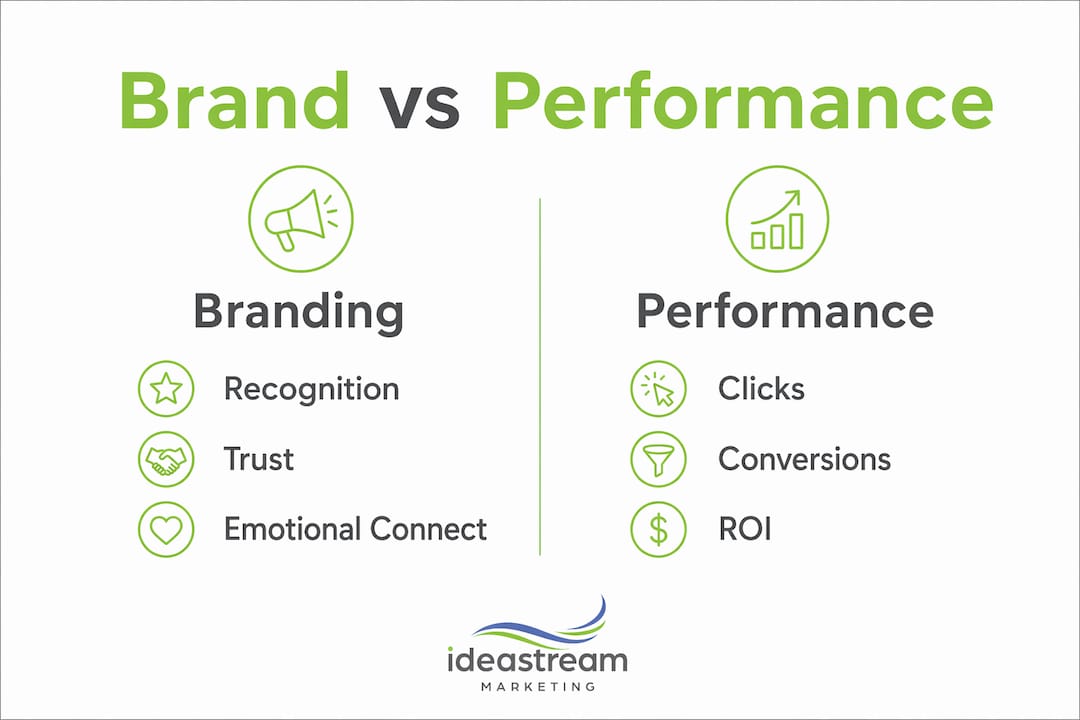
Branding is defined as the strategic system of identity, trust, and emotional connection that determines whether your digital campaigns convert or simply spend. The role of branding in digital campaigns goes far beyond logos and color palettes. It is the foundation that decides whether your Google Ads, Meta campaigns, and SEO efforts compound into growth or drain your budget with diminishing returns. Research from McKinsey confirms that integrating brand with performance measurement yields up to 30% efficiency gains and 10% revenue growth. Companies like Apple and Nike do not run disconnected ads. They run unified brand systems where every digital touchpoint reinforces the same identity, and their results reflect that discipline.
How the role of branding in digital campaigns drives measurable ROI
Brand recognition is not a soft metric. It is a direct multiplier on every dollar you spend in paid channels. Customers purchase from companies they recognize and trust, and when brand recognition is low, paid tactics underperform regardless of targeting precision or ad spend. This means a business with weak brand equity pays more per click, earns fewer conversions, and fights harder for every customer than a recognized competitor spending the same budget.
The performance impact is specific and measurable. Strong brand positioning improves paid search quality scores and lowers acquisition costs because ad copy and landing pages become congruent with what the audience already expects. Google rewards relevance, and brand clarity creates that relevance at scale. A law firm in Nassau County that has built consistent brand recognition through content and social presence will see lower cost-per-click on Google Ads than a competitor with identical targeting but no brand foundation.
| Metric | With strong branding | Without strong branding |
|---|---|---|
| Cost per click | Lower due to quality score lift | Higher from poor relevance signals |
| Conversion rate | Higher from pre-existing trust | Lower from unfamiliarity friction |
| Customer acquisition cost | Decreases over time | Remains flat or increases |
| Campaign efficiency | Up to 30% improvement (McKinsey) | Baseline or declining |
| Long-term revenue impact | 10%+ growth potential | Limited by discount dependency |
Brand marketing outperforms performance marketing 80% of the time in total sales and ROI impact over time, according to research from Analytic Partners. That finding reframes how marketing leaders should think about budget allocation. Performance channels capture demand. Brand channels create it.
Pro Tip: Replace last-touch attribution as your primary success metric. Track branded search volume, assisted conversions, and brand recall surveys alongside CPC and ROAS to see the full picture of what your brand is doing for your campaigns.
How do you balance brand building and performance marketing?
The most cited framework for budget allocation comes from researchers Les Binet and Peter Field, whose work establishes an optimal 60/40 split between brand building and performance marketing. Sixty percent toward brand, forty percent toward direct response. That ratio reflects how demand is actually created: brand investment builds mental availability over time, so that when a performance ad appears, the audience is already primed to act.

The multiplicative effect here is the key insight most marketing teams miss. Brand and performance marketing do not simply add together. They amplify each other. A well-branded business running Google Ads sees higher click-through rates, better quality scores, and stronger post-click conversion rates than an unbranded competitor running the same ads. The brand does the heavy lifting before the ad even appears.
Neglecting either side of this equation creates predictable problems:
Too much focus on performance marketing alone:
- Campaigns become discount-dependent, training customers to wait for deals
- Cost per acquisition rises as audiences become fatigued by direct response messaging
- No residual brand equity accumulates between campaign flights
- Pricing power erodes and customer loyalty weakens over time
Too much focus on brand building alone:
- Demand is created but not captured, leaving revenue on the table
- Attribution models show weak short-term returns, making budget defense difficult
- Sales cycles lengthen without performance channels to close intent-ready buyers
- Executive stakeholders lose confidence in marketing spend without measurable conversion data
The practical takeaway is that neither strategy works at its best in isolation. The businesses seeing the strongest digital marketing growth are those treating brand and performance as a single integrated system rather than competing budget lines.
Why consistent brand messaging across channels amplifies campaign results
Brand clarity acts as a strategic anchor that simplifies every campaign decision and reduces the fragmentation that kills ROI. CMSWire describes this as the “North Star” function of brand strategy. When your brand purpose, voice, and visual identity are clearly defined, every channel decision becomes faster and more coherent. When they are not, each channel team makes independent creative choices, and the cumulative effect is a fragmented customer experience that erodes trust.
Fragmentation is more costly than most teams realize. A prospect who sees a polished LinkedIn ad, clicks through to a dated website, and then receives a generic email sequence experiences three different brands. That inconsistency creates cognitive friction, and friction kills conversion. Consistent brand positioning improves paid search quality scores and lowers acquisition costs precisely because alignment between ad messaging and landing page experience signals relevance to both the algorithm and the human reader.
Here are the best practices for maintaining brand consistency across digital channels:
- Create a living brand guidelines document that covers voice, tone, color, typography, and messaging hierarchy. Make it accessible to every team and agency partner working on your campaigns.
- Audit all digital touchpoints quarterly. Compare your paid ads, organic social posts, website copy, and email sequences side by side. Inconsistencies become obvious when you look at them together.
- Define your brand’s core message in one sentence. If your team cannot articulate what you stand for in a single sentence, your campaigns will reflect that confusion.
- Apply brand filters to every campaign brief. Before approving any ad creative or content piece, ask: does this reflect our brand voice? Does it reinforce our positioning?
- Align paid and organic strategies under one brand narrative. Your SEO content, Google Ads copy, and social media posts should feel like chapters of the same story, not separate publications.
| Campaign type | Coordinated brand approach | Fragmented approach |
|---|---|---|
| Paid search | Higher quality scores, lower CPC | Mismatched copy, wasted spend |
| Social media | Stronger engagement, brand recall | Inconsistent tone, reduced trust |
| Email marketing | Higher open and click rates | Generic messaging, low relevance |
| SEO content | Topical authority, better rankings | Scattered topics, weak signals |
Pro Tip: Use your brand guidelines as a filter for campaign decisions, not just a reference document. When a creative choice feels uncertain, the guidelines should resolve it. If they do not, the guidelines need updating.
What measurement frameworks actually capture branding’s impact?
Standard attribution models are structurally biased against brand. Last-touch attribution undervalues brand’s role by crediting the final click while ignoring the brand exposure that created the intent to search in the first place. This is not a minor measurement gap. It systematically redirects budget away from brand investment and toward bottom-funnel channels, which then underperform because the top-of-funnel demand creation has been defunded.
A more accurate measurement framework tracks brand impact at every stage of the funnel. The metrics that matter most include:
- Branded search volume: Growth in searches for your company name signals that brand awareness is converting into active intent. This is one of the clearest indicators that brand investment is working.
- Assisted conversions: Google Analytics 4 and similar platforms show how many conversions involved a brand touchpoint earlier in the path, even if it was not the final click.
- Brand equity surveys: Periodic surveys measuring awareness, favorability, and purchase intent among your target audience provide qualitative data that attribution models cannot capture.
- Customer acquisition cost trends: Monitor CAC over 6 to 12 month periods rather than campaign by campaign. Brands that invest consistently in awareness see CAC decline over time as recognition reduces friction.
- Share of branded vs. non-branded traffic: A rising share of branded organic traffic indicates that your brand is building independent demand, reducing reliance on paid acquisition.
Combining brand metrics with performance KPIs yields up to 30% efficiency gains, according to McKinsey research. That number represents real budget recovered from waste. For a business spending $200,000 annually on digital campaigns, a 30% efficiency gain is $60,000 in recovered value without increasing spend.
Pro Tip: Monitor customer acquisition cost over rolling 12-month windows rather than optimizing for weekly ROAS. Short-term ROAS fixation consistently defunds the brand investment that makes long-term CAC reduction possible.
Key takeaways
Strong branding functions as the strategic foundation that makes every digital campaign more efficient, more trusted, and more profitable over time.
| Point | Details |
|---|---|
| Branding multiplies paid performance | Brand recognition lowers CPC, raises quality scores, and improves conversion rates across paid channels. |
| The 60/40 framework works | Allocate roughly 60% to brand building and 40% to performance marketing for compounding long-term returns. |
| Consistency reduces wasted spend | Fragmented brand messaging across channels creates friction that directly lowers conversion rates and ROI. |
| Attribution models hide brand value | Last-touch models systematically undercount brand’s contribution; use branded search and assisted conversions to correct this. |
| Measurement drives better allocation | Integrating brand metrics with performance KPIs can recover up to 30% in campaign efficiency, per McKinsey. |
Why brand clarity should come before your next campaign launch
After working with businesses across professional services, healthcare, and hospitality, the pattern I see most often is this: a company invests heavily in Google Ads or social media campaigns before they have resolved what their brand actually stands for. The campaigns run, the spend accumulates, and the results are mediocre. The instinct is to blame the channel or the targeting. The real problem is almost always upstream.
Brand purpose and values need to be defined before marketing channels are activated. This is not a philosophical point. It is a practical one. When brand clarity exists, every channel executes more coherently. Ad copy writes itself. Landing pages convert better. Social content resonates. Without it, every campaign is a fresh negotiation about what you are trying to say, and that inefficiency compounds across every dollar you spend.
The other mistake I see regularly is treating branding and digital marketing as separate departments with separate budgets and separate goals. That structure produces exactly the fragmentation described above. The businesses that win over time treat them as a single system. Brand strategy informs campaign execution. Campaign data informs brand refinement. The loop runs continuously, and the results compound. Branding also reduces your dependence on discounts and promotions. When customers trust and recognize your brand, they do not wait for a sale. That pricing power is worth more than most attribution models will ever show you.
— Dean
Build campaigns that your brand can actually support
At Idea Stream Marketing, we work with businesses across Long Island, New York City, and nationwide to align brand strategy with digital campaign execution. We have seen firsthand how AI-driven SEO services perform significantly better when paired with clear brand positioning, consistent messaging, and a website that reflects the brand’s identity at every touchpoint. Our team builds the full system: brand clarity, search visibility, paid campaign management, and content that compounds over time. If your campaigns are spending without building, it is time to look at the foundation. Schedule a consultation with Idea Stream Marketing to see where brand and performance can work together for your business.
FAQ
What is the role of branding in digital campaigns?
Branding establishes the identity, trust, and recognition that make digital campaigns more efficient and more persuasive. Without it, paid and organic channels operate without a foundation, resulting in higher acquisition costs and lower conversion rates.
How does branding affect digital advertising performance?
Strong branding improves paid search quality scores, lowers cost per click, and raises conversion rates by creating congruence between ad messaging and audience expectations. McKinsey research links brand and performance integration to up to 30% efficiency gains.
What is the right budget split between brand and performance marketing?
Research by Les Binet and Peter Field recommends approximately 60% of marketing budget toward brand building and 40% toward performance marketing. This ratio maximizes both long-term demand creation and short-term conversion capture.
Why do standard attribution models undervalue branding?
Last-touch attribution credits only the final interaction before conversion, ignoring earlier brand exposures that created the intent to search or engage. This structural bias causes teams to defund brand investment and over-invest in bottom-funnel channels.
How do you measure the impact of branding on digital campaigns?
Track branded search volume growth, assisted conversions, brand equity surveys, and customer acquisition cost trends over 6 to 12 month windows. These metrics reveal brand’s contribution where standard attribution models cannot.

