



September 26, 2026



TL;DR:
- Most restaurant marketing failures stem from disconnected efforts and a lack of measurement, rather than insufficient promotion.
- Effective marketing integrates discovery, conversion, and retention into a cohesive system driven by targeted messaging and data tracking.
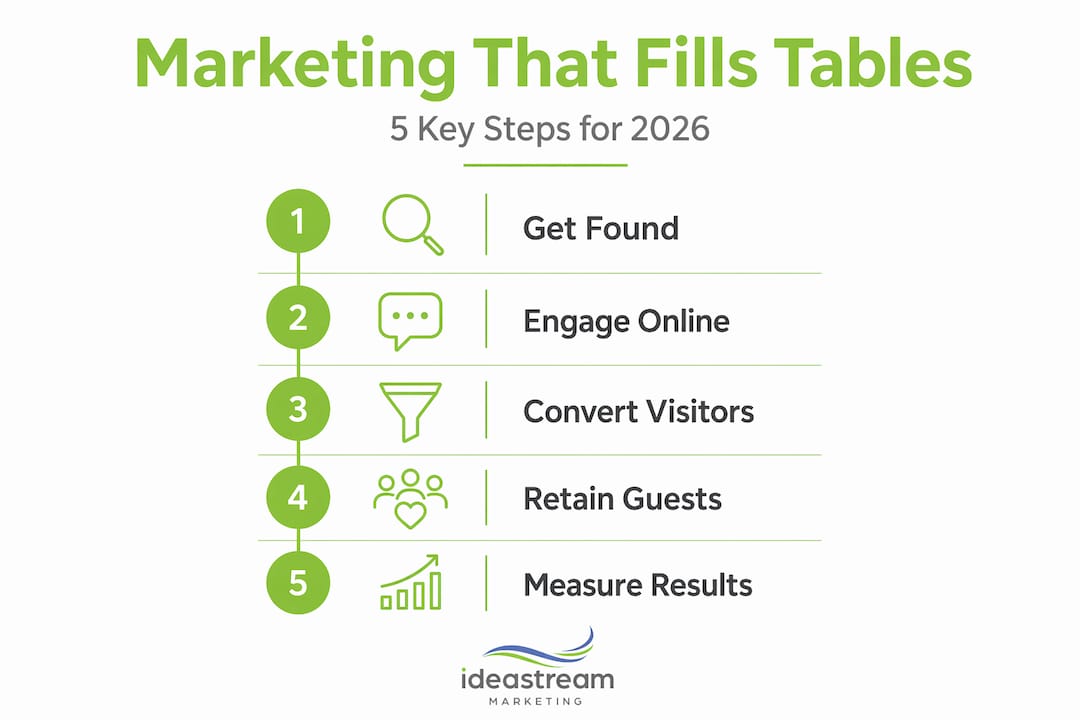
Most restaurant owners treat marketing as a collection of separate tasks: post on Instagram, run a special, maybe try an ad. That approach rarely builds lasting growth. Effective restaurant marketing is a connected system with three distinct jobs: help people discover you, convince them to order or visit, and bring them back again. Restaurant marketing works best as that full loop, not as isolated moments. Get all three working together and you have a business that grows with discipline rather than luck.
Table of Contents
- Key takeaways
- What is restaurant marketing, really?
- Getting found: local SEO and paid ads
- Turning browsers into customers
- Retention: your most profitable marketing channel
- Measuring what actually works
- My take on why most restaurant marketing fails
- Let us build your restaurant marketing system
- FAQ
Key takeaways
| Point | Details |
|---|---|
| Marketing is a system | Discovery, conversion, and retention must work together to produce consistent, compounding results. |
| Audience targeting comes first | Knowing exactly who you serve shapes every channel, message, and offer you create. |
| Local SEO is non-negotiable | An optimized Google Business Profile drives walk-ins and orders without ongoing ad spend. |
| Retention beats acquisition cost | Automated campaigns generate 3 to 5x higher ROI than manual outreach to new guests. |
| Measure what actually matters | Tie campaign activity to POS data so you know which marketing dollars produce real sales. |
What is restaurant marketing, really?
Before you spend a dollar on ads or a minute on content, you need to know exactly who you are trying to reach. That sounds obvious. Most restaurants skip it anyway.
Your ideal customer is not “everyone who eats food.” A family-friendly brunch spot in a suburban neighborhood attracts a very different guest than a late-night ramen bar near a college campus. The demographics, the discovery habits, and the decision triggers are completely different.
To build a useful customer profile, consider:
- Age and household type. Are your guests young professionals eating solo, or families coordinating a birthday dinner?
- Discovery behavior. Do they search Google Maps on a phone, scroll TikTok for food content, or rely on word-of-mouth from neighbors?
- Decision triggers. Are they motivated by price, speed, a specific cuisine craving, or the social experience?
- Visit frequency potential. Are they a once-a-year special-occasion diner or a twice-a-week regular?
Answering these questions changes everything: which social platforms you prioritize, what your promotions should offer, and how you write every ad and email. A win-back SMS to a lapsed regular should feel nothing like a first-impression Google Ad targeting someone new to the neighborhood.
Pro Tip: Run a quick survey through your email list or loyalty app asking guests how they first found you. The answers almost always surprise restaurant owners and immediately clarify where to focus.
Getting found: local SEO and paid ads
Discovery is where most restaurants leave money on the table. When someone in your area searches “best tacos near me” or “Italian delivery tonight,” you need to appear. That requires two things working in parallel: strong organic local presence and targeted paid reach.
Optimizing your Google Business Profile
Your Google Business Profile is often the first thing a potential guest sees. Get it fully filled out: accurate hours, updated photos, menu links, and the correct cuisine categories. Respond to reviews, both positive and negative, because consistent brand presence in local search builds the trust signals Google uses to rank you higher. A profile with 50 recent photos and 200 reviews outranks one with 8 photos and silence every single time.
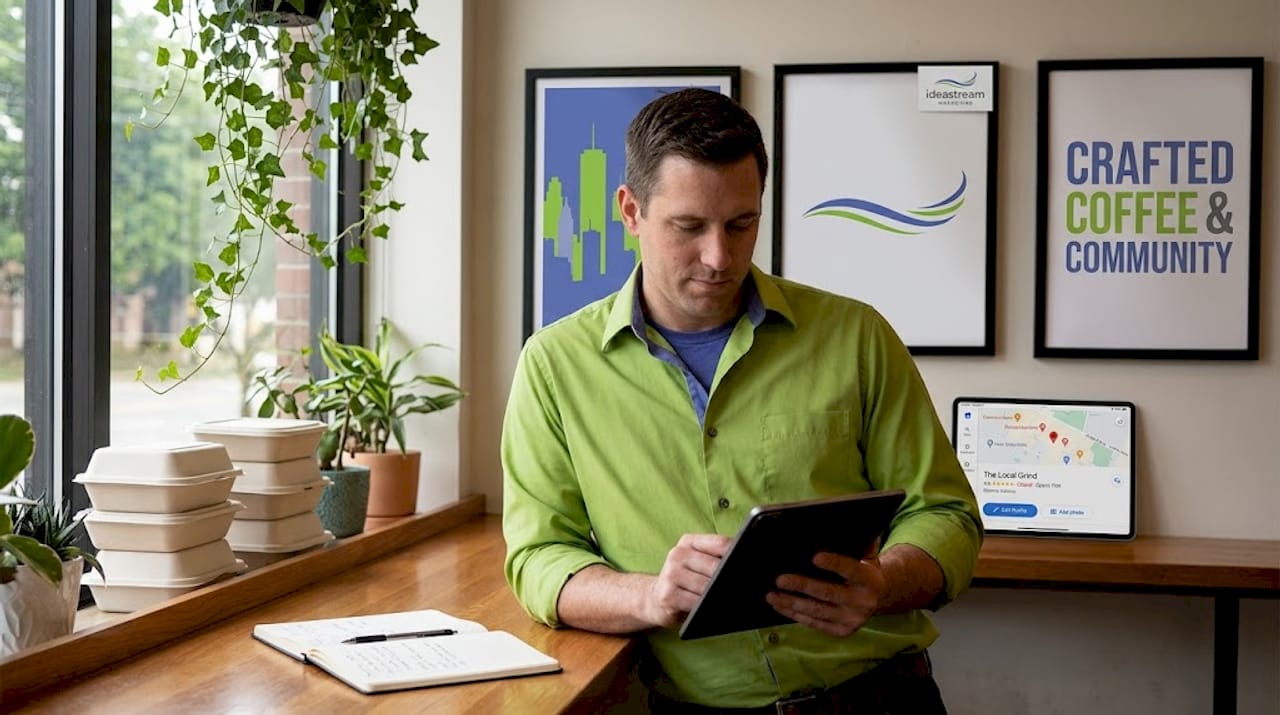
Local restaurant SEO also means having your name, address, and phone number consistent across every directory: Yelp, TripAdvisor, OpenTable, and your own website. Discrepancies confuse both search algorithms and real people.
Balancing organic and paid
| Channel | Best for | Cost profile |
|---|---|---|
| Google Business Profile | Nearby, high-intent searches | Free to maintain |
| Local SEO content | Sustained organic visibility | Time investment |
| Google Ads | Fast reach, specific offers | Pay per click |
| Social media ads | Brand awareness, new audience growth | Flexible budget |
Paid advertising amplifies what is already working organically. If your Google Business Profile is weak and your website has no clear ordering link, paid ads send traffic to a dead end. Fix the foundation first, then use Google Ads to scale.
Pro Tip: Set your Google Ads location radius tightly, within 3 to 5 miles for dine-in and 5 to 8 miles for delivery. Broad targeting wastes spend on people who will never drive to you.
Turning browsers into customers
Getting found is half the battle. Getting someone to actually place an order or book a table requires removing friction and building confidence fast. Making online ordering easy to find at the moment someone is ready to commit is one of the highest-leverage moves in online marketing for eateries.
What your website and ordering pages must do
Your website needs exactly one job on every page: move the visitor closer to an order or a reservation. That means a clear menu link above the fold, a prominent “Order Now” button, and no broken links or outdated PDF menus that require a download.
Food delivery conversion pages carry a specific burden. Delivering clarity early on fees, delivery timing, and service zones reduces the mobile checkout drop-off that costs restaurants revenue every day. Hiding the $4.99 delivery fee until the checkout screen is one of the top reasons people abandon orders. Show it up front. Guests respect transparency.
| Conversion element | Why it matters |
|---|---|
| Prominent ordering CTA | Reduces steps between intent and action |
| Clear delivery fee display | Eliminates checkout abandonment surprise |
| High-quality food photography | Increases average order value by influencing item selection |
| Recent positive reviews visible on-page | Builds trust before commitment |
| Mobile-optimized layout | Mobile friction directly reduces revenue efficiency |
Social proof is underused by most independent restaurants. A few well-placed Google review excerpts on your ordering page or a counter showing “4.8 stars across 340 reviews” does real conversion work. It tells first-time visitors that others made this same choice and were happy.
Branding and photography matter more than most owners think. A dark, blurry photo of your signature dish costs you orders. Professional food photography, or even well-lit smartphone photos taken in natural light, directly influences what people add to their cart. The average check size goes up when dishes look beautiful.
Pro Tip: Build separate pages for dine-in, takeout, and delivery. Each visitor has a different intent and a different set of questions. A page built around their specific situation converts better than a single generic “Order” page.
Retention: your most profitable marketing channel
Acquiring a new customer costs five to seven times more than keeping an existing one. That math makes retention the most cost-effective growth lever in your entire marketing system. Yet most restaurants spend 90% of their marketing budget chasing new faces.
Automated email campaigns generate 15 to 25% more repeat visits and 3 to 5x higher ROI than manual outreach. The key word is “automated.” You set it up once and it works continuously, responding to guest behavior rather than a marketing calendar.
Here is how to structure a retention system that actually performs:
- Build your audience segments first. Minimum useful groups include new guests (first visit within 30 days), regulars (two or more visits in 60 days), lapsed guests (no visit in 60 to 90 days), and high-value guests (top 20% by spend). Segmented messaging converts 3 to 5x better than blasting everyone the same offer.
- Set up three core SMS flows. A welcome message sent within 24 hours of a first order, a win-back message triggered at 45 to 60 days of inactivity, and a birthday message sent 2 to 3 days before the guest’s birthday. Behavior-triggered SMS flows consistently outperform generic frequency-heavy broadcasts.
- Use email for awareness and SMS for action. Email builds broad awareness and is suited for storytelling, seasonal menus, and longer content. SMS is short, personal, and time-sensitive. A Thursday SMS saying “Your favorite bowl is 15% off tonight only” drives same-day covers in a way no email can match.
- Respect frequency caps. For SMS, two to four messages per month is the ceiling for most audiences. Going beyond that triggers opt-outs fast. Always include a clear one-tap unsubscribe option and confirm compliance with the Telephone Consumer Protection Act.
- Tie your loyalty program into automation. Restaurant loyalty programs work best when they trigger messages automatically. A points milestone email, a free dessert on a loyalty anniversary, or a double-points weekend SMS feels personal even when it is fully automated.
“Triggered, behavior-based campaigns outperform calendar-based blasts by increasing relevance and ROI.”
For social media for restaurants, platforms like Instagram and TikTok support retention too. Regular, on-brand content reminds your existing audience that you are still there and worth returning to. Check out these TikTok content ideas built specifically for restaurants and cafes if you are not sure where to start.
Pro Tip: Text message open rates average above 90%. Use that channel for time-sensitive offers and confirmations only. If you send a plain promotion that could have been an email, guests notice and opt out.
Measuring what actually works
You cannot grow what you do not measure. The restaurants that improve fastest are the ones that connect their marketing activity to actual revenue, not just impressions or followers.
Core KPIs to track by category:
- Discovery: Google search impressions, profile views, website traffic from organic and paid sources, and maps clicks.
- Conversion: Online order completion rate, average check size, table booking rate, and cart abandonment rate.
- Retention: 30 and 60-day repeat visit rate, email and SMS open and click rates, loyalty program enrollment, and redemption rate.
Attribution linking campaigns to POS data over a 7 to 14 day window is the single biggest upgrade most restaurants can make to their measurement. Without it, you are guessing which campaign drove covers last Tuesday. With it, you know.
Multi-channel execution suffers when tools are unintegrated. An email platform that does not connect to your ordering system and a social tool that does not talk to your POS creates data silos that make smart decisions nearly impossible. Integrated dashboards remove that guesswork.
Test one change at a time. If you update your delivery page, your win-back SMS, and your Google Ads all in the same week, you have no idea which one moved the needle. Sequence your tests and give each one 2 to 4 weeks of data before drawing conclusions.
Pro Tip: Customer support conversations are free market research. If guests repeatedly ask “Do you deliver to my area?” or “Is your menu updated?”, those are conversion problems your marketing needs to solve before you run another ad.
My take on why most restaurant marketing fails
I have worked with enough restaurants to notice a pattern. The ones that struggle are almost always doing more marketing, not less. More platforms, more promotions, more tools. But nothing is connected, and nothing is measured. They are busy, not effective.
The biggest waste I see is restaurants spending heavily on new guest acquisition while completely ignoring the guests who already love them. A win-back campaign to lapsed regulars almost always outperforms a new audience ad in both cost and conversion. Every time. The people who already chose you once just need a reason to come back.
I also want to be honest about AI. AI supports speed and ideation in marketing workflows, but it needs human oversight for anything guest-facing. Wrong hours in an automated response, an inaccurate menu description, or a tone-deaf promotional message can damage the trust you spent years building. Use AI-driven marketing tools to move faster, but keep a real person reviewing what goes out the door.
Successful restaurant marketing in 2026 is about discipline and consistency, not louder noise. Pick fewer channels, do them well, and measure everything. That is where the wins are.
— Dean
Let us build your restaurant marketing system
At Idea Stream Marketing, we work with restaurants that are done guessing and ready to grow with a system that actually ties together. From AI-powered SEO services that put your restaurant in front of high-intent local searchers, to social media strategies that build a real audience and drive repeat visits, we handle the full picture.
We set up email and SMS automation, optimize your online ordering pages for conversion, and build integrated dashboards so you can see which marketing efforts are producing real revenue. Whether you are on Long Island, in New York City, or anywhere across the United States, we tailor every strategy to your guests and your goals. Schedule a consultation and let us show you what a connected restaurant marketing system can do for your business.
FAQ
What is restaurant marketing?
Restaurant marketing is the process of attracting new guests, converting interest into orders or reservations, and retaining customers for repeat visits. It works best as a connected system across discovery, conversion, and retention rather than isolated promotions.
How does local SEO help restaurants get more customers?
Local restaurant SEO improves how your business appears in Google Maps and local search results, placing you in front of high-intent guests searching for food nearby. An optimized Google Business Profile with accurate information, recent photos, and consistent reviews is the foundation.
What are the most effective restaurant promotions?
Behavior-triggered promotions, such as win-back offers to lapsed guests and birthday messages, outperform generic discounts because they reach the right person at the right moment. Effective restaurant promotions are personalized, time-sensitive, and delivered through the channel the guest prefers.
How do restaurant loyalty programs work with marketing automation?
Restaurant loyalty programs integrate with email and SMS automation to trigger messages when guests hit milestones, approach redemption thresholds, or lapse in visits. This makes loyalty feel personal and timely without requiring manual effort from your team.
How should restaurants measure their marketing results?
Track discovery metrics like search impressions and map clicks, conversion metrics like order completion rate and average check size, and retention metrics like 30-day repeat visit rate. Connecting campaign activity to POS data within a 7 to 14 day attribution window gives the most accurate picture of what is working.