



October 12, 2026
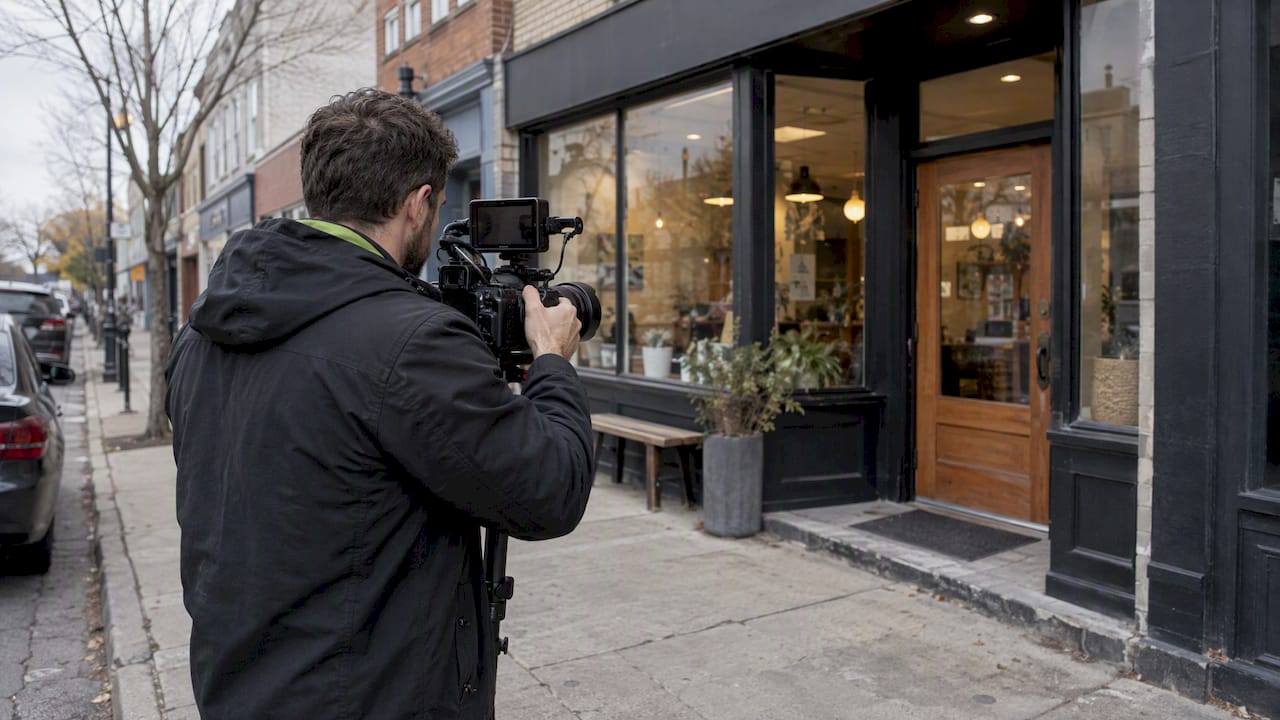



A branded content strategy is a repeatable plan for creating stories, videos, or audio that give viewers real value first and sell second, so the brand earns attention instead of interrupting it. The goal is affinity and trust, not an immediate sale. Start by writing a one-line definition of your viewer and picking one flagship format you can commit to for at least a quarter.
TL;DR:
- Effective branded content programs focus on audience-driven formats like podcasts and documentaries for trust-building and depth, paired with short-form social content for discovery.
- Planning distribution channels and repurposing workflows before production ensures sustained visibility and maximizes the content’s return on investment.
- KPIs should align with campaign objectives, measuring awareness with reach and recall, or engagement with watch time and shares, rather than raw views alone.
- Investing equally in distribution and amplification, such as owned channels, paid social, and native platform formatting, is critical for content success and long-term reach.
- Treat branded content as a media asset with a multi-year outlook, integrating production, SEO, and distribution into a unified, repeatable system.
Table of Contents
- What Makes a Branded Content Strategy Work?
- Which Formats Should You Use, and What Do They Look Like in Practice?
- How Do You Build a Branded Content Strategy Step by Step?
- How Do You Distribute and Amplify Branded Content?
- Which KPIs Actually Prove Branded Content Is Working?
- What Should Marketers Prioritize Right Now?
- What Does an Agency-Grade Production Brief Look Like?
- Why Branded Content Needs to Be Treated as a Media Asset, Not a Campaign
- How Idea Stream Marketing Turns Strategy Into a Working Program
- Sources
- FAQ
What Makes a Branded Content Strategy Work?
Branded content is designed to build trust rather than push for an immediate sale. It tells a story, sparks an emotion, or hands the viewer something useful, while staying recognizably true to the brand’s voice, according to Templafy’s breakdown of the format. That distinction from a standard ad matters more than most marketing teams admit. An ad interrupts. Branded content earns the click.
Five pillars separate the programs that work from the ones that get skipped:
- Audience-first thinking. Define who you’re making this for and where they actually spend their attention, not where your budget wishes they spent it.
- Value before pitch. The content has to hold up on its own. If it wouldn’t be interesting without your logo on it, you’ve made an ad in disguise, a point the Content Marketing Institute makes bluntly in its audience-first guidance.
- A point of view you can repeat. Pick a narrative thesis, a stance, a lens, and reuse it episode after episode so viewers start to recognize your voice before they see your name.
- Format matched to habit. A 40-something contractor scrolling Facebook during lunch and a 26-year-old designer watching TikTok before bed need different formats, not the same video cut two ways.
- Distribution planned before the camera rolls. Programs that treat distribution as an afterthought get one good video and no audience. Plan the channels first, then produce for them.
Audience-first branded content consistently beats product-driven messaging on recall and engagement, according to Content Marketing Institute research. That’s not a nice sentiment. It’s the entire operating principle for everything below.
Which Formats Should You Use, and What Do They Look Like in Practice?
Format choice is a budget and audience decision before it’s a creative one. Here’s how the main formats trade off, with the kind of business each tends to fit.
- Brand film or documentary series. High production value, high emotional payoff, and a long shelf life on YouTube and your website. Strategic narrative clarity determines whether a brand film moves people or gets scrolled past, according to Hammerhead’s brand film guide — a $30,000 budget with a weak story loses to a $5,000 budget with a sharp one every time.
- Podcast or audio series. Lower production cost, higher intimacy, and a format that rewards consistency over polish. A weekly interview show builds a habit with listeners that a one-off video rarely can.
- Short-form social (Reels, TikTok, YouTube Shorts). Built for discovery and frequency, not depth. This is where new viewers find you, even when the flagship content lives somewhere else.
- Creator collaborations and curated user content. Borrowed trust and distributed reach. A creator’s audience already believes them, which is a shortcut your own channel doesn’t get for free.
- Interactive tools and editorial series. Calculators, quizzes, or a recurring column solve a specific problem, so people bookmark and return instead of watching once and forgetting.
Branded podcasts and documentary-style series remain the strongest formats for trust and depth, while short-form content is what drives frequency and discovery, according to Fame’s branded content marketing guide. Most mature programs run both: a flagship show for depth, and a stream of short clips pulled from it for reach. That pairing is the backbone of the workflow in the next section.
How Do You Build a Branded Content Strategy Step by Step?
A branded content program runs on a repeatable system: define the viewer, build a production framework, then run a distribution machine that actually gets the work seen, according to partnrUP’s strategy-to-distribution framework. Here’s how that breaks down into steps a marketing team can actually run.
- Define your viewer. Write down demographics, but don’t stop there. Add psychographics (what they care about), platform habits (where they scroll and when), and the specific problem or curiosity that gets them to stop swiping.
- Map objective to KPIs before you shoot anything. Awareness campaigns get measured on reach and recall. Engagement campaigns get measured on watch time and shares. Conversion campaigns get measured on lead quality and attribution. Decide which one you’re running now, because the brief changes depending on the answer.
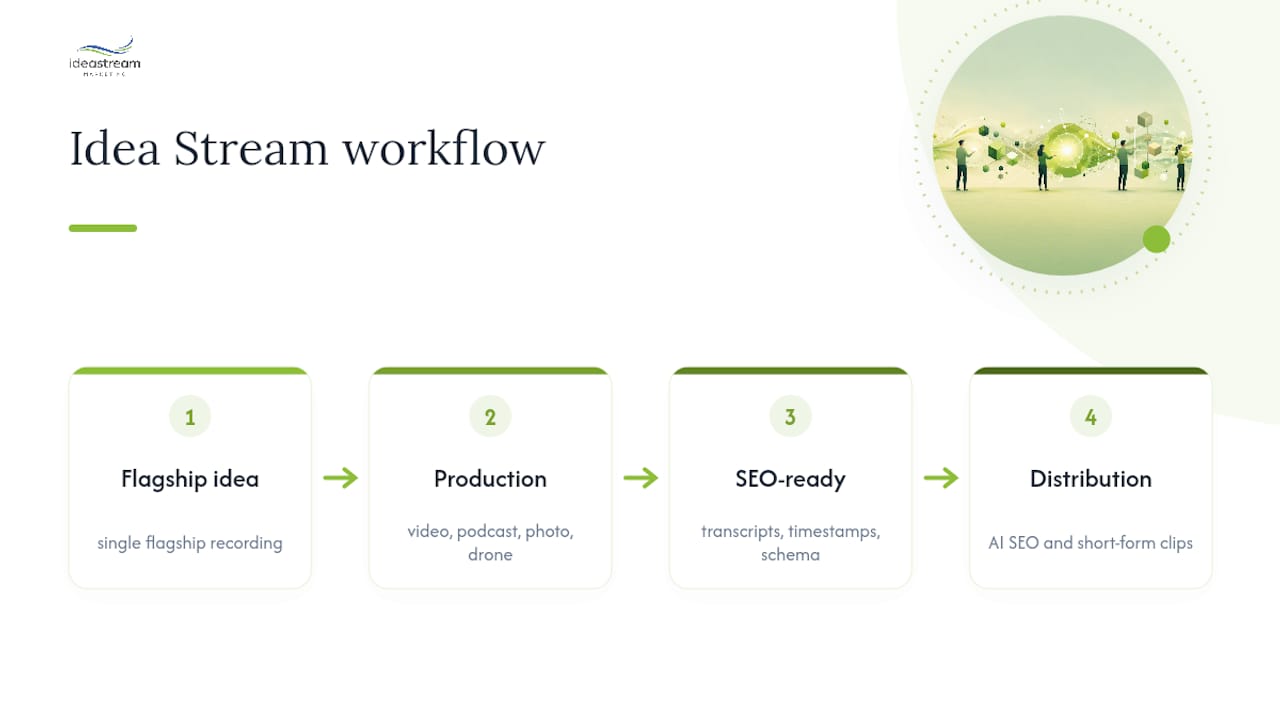
- Pick one flagship format and sketch a repurposing map. A 20-minute interview becomes six short clips, three quote graphics, one newsletter feature, and a landing page excerpt before you ever hit record.
- Write a creator-friendly brief. Cover the viewer profile, the narrative thesis, usage rights, and where the content will run. Ambiguity here is what causes reshoots.
- Split the budget deliberately. A common failure point is spending 90% on production and 10% on getting anyone to see it. Distribution deserves a budget line equal to production, not a leftover.
- Set the timeline. Build in time for pre-production, filming, drone or b-roll capture if needed, editing, motion graphics, and a real approval round before the deliverables ship.
- Schedule the repurposing cadence. Long-form content should feed short clips within a week, those clips feed social within days, and the strongest quotes feed email and sales decks within the month.
Pro Tip: Shoot your flagship interview or brand film with repurposing in mind from the first take. Capture extra b-roll, alternate angles, and quotable moments on purpose. Editing six months of social clips from one shoot day is far cheaper than scheduling six separate shoots.
How Do You Distribute and Amplify Branded Content?
Getting content made is half the job. Getting it seen is the other half, and it’s the half most teams underfund. Plan distribution before production, and budget for amplification the same way you budget for the shoot itself, according to Mintec’s analysis of branded content programs.
A working distribution mix usually runs through four channels:
- Owned channels first. Publish on your landing page, push it through your email newsletter, then post natively to social and YouTube. This is your baseline reach before you spend a dollar on ads.
- Paid social and creator whitelisting. Boosting a creator’s own post through their handle almost always outperforms boosting the same clip from your brand account. The trust transfers with the format.
- Earned coverage through partner outreach. Cross-promote with adjacent brands, trade publications, or podcast guest swaps to pick up audiences you couldn’t reach on your own budget.
- Native repackaging per platform. A 16:9 video for YouTube needs to become a 9:16 crop with captions for Instagram Reels and TikTok, not just a resized upload. Platform-native formatting changes completion rates.
Distribution and repurposing aren’t a phase that happens after the “real” work. They’re the mechanism that turns one shoot day into months of visibility, which is exactly why the repurposing map from the how-to section has to exist before the camera turns on, not after.
Which KPIs Actually Prove Branded Content Is Working?
Vanity metrics like raw view counts feel good in a slide deck and prove almost nothing to a CFO. Match every KPI to the objective the campaign was built for, not the number that’s easiest to screenshot.
Awareness campaigns get measured on reach, frequency, and brand recall lift. Engagement campaigns get measured on watch time, completion rate, and share volume. Conversion campaigns get measured on lead quality, cost per lead, and multi-touch attribution back to the content itself.
A repeatable production and repurposing workflow is the single biggest operational lever in branded content. It turns one asset into sustained reach and compounding SEO value over time, rather than a one-time spike that fades in a week, according to partnrUP’s framework analysis.
Set your reporting cadence in tiers:
- Weekly: views, watch time, and click-through on repurposed clips.
- Monthly: engagement trends, lead volume, and cost per lead by channel.
- Quarterly: brand lift, share of voice, and pipeline attributed back to the content program.
When you present results to leadership, give context and a trend line, not a single flattering number. A raw view count in isolation means almost nothing to a stakeholder trying to judge whether the budget was worth it.
What Should Marketers Prioritize Right Now?
A few habits separate branded content programs that compound from the ones that fizzle after one campaign.
- Fund distribution at parity with production, or the best video you’ve ever made sits at 400 views.
- Design every shoot for repurposing from the first cut, not as an afterthought once the flagship piece is already locked.
- Use short-form clips as a funnel into the long-form piece, seeding curiosity that drives subscriptions to the full episode or series.
- Optimize titles, transcripts, and metadata for search and AI discoverability, since a video that ranks keeps earning views long after the campaign budget runs out.
Strategy and audience fit outperform raw production budget almost every time, a pattern that shows up consistently in Hammerhead’s brand film production analysis. Spend where it changes outcomes, not where it looks impressive in a reel.
What Does an Agency-Grade Production Brief Look Like?
A working one-page brief covers seven things: the viewer profile, the narrative thesis, the objective and its matching KPIs, the chosen format, the key scenes or segments, usage rights, and the distribution plan. Skip any one of these and the production team ends up guessing, which shows up later as reshoots or a piece that doesn’t fit the channel it was meant for.
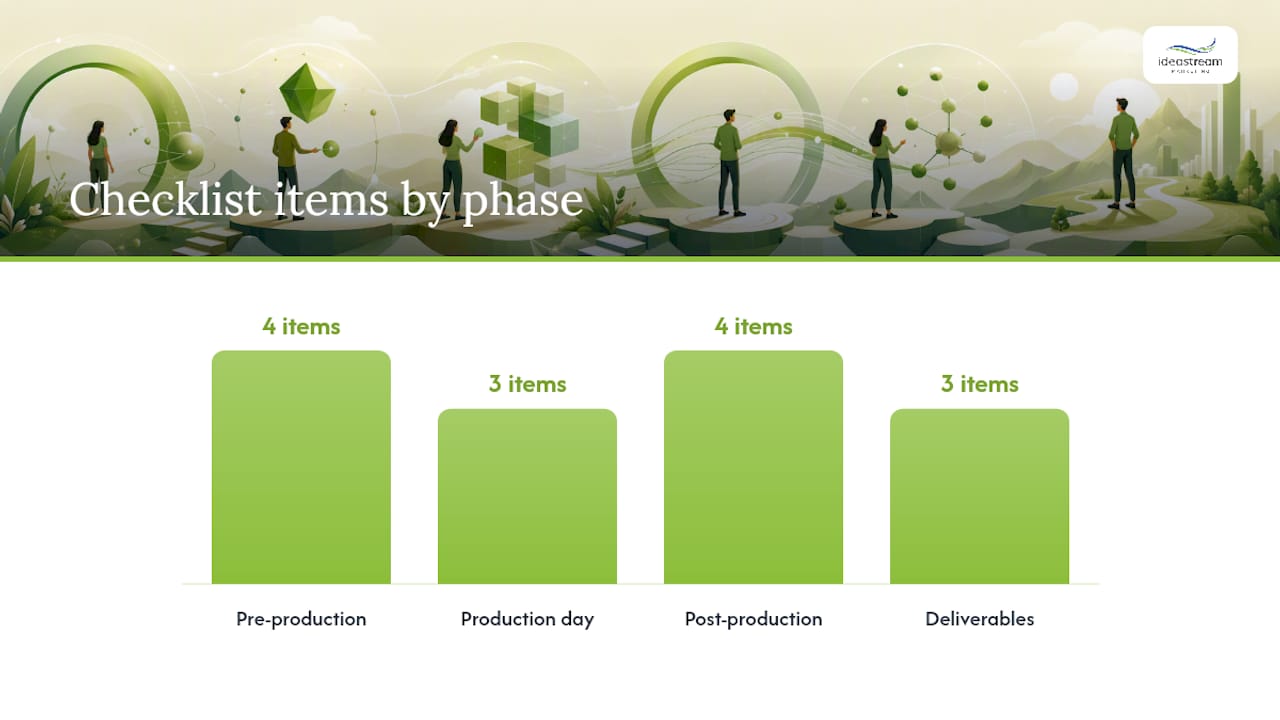
On the production side, a checklist keeps a multi-camera shoot or podcast session from turning into a scramble:
- Pre-production: locked script or interview outline, location or studio booking, shot list, and drone permissions if aerial footage is planned.
- Production day: primary footage, b-roll, and backup audio captured in the same session to avoid a second shoot.
- Post-production: editing, color grading, motion graphics, and captions built for both long-form and vertical crops.
- Deliverables: transcripts, clip timestamps, and metadata prepared alongside the final cut, not bolted on after the fact.
Pro Tip: Ask your production partner for clip timestamps and a transcript with every long-form delivery. That single request turns one video into a searchable asset and a stack of ready-to-post clips, instead of a file that sits in a folder after launch week.
Integrated video SEO work, paired with AI-aware metadata and schema, extends the shelf life of every piece well past its launch date.
Why Branded Content Needs to Be Treated as a Media Asset, Not a Campaign
The biggest mistake I see marketing leaders make is budgeting for branded content like a campaign with a start and end date. That framing sets the wrong expectations from day one. A media property compounds; a campaign just ends. Treating your podcast or video series as an owned asset means leadership signs off on twelve months of consistency, not a single flashy launch they’ll quietly forget about by the second quarter.
Align stakeholders on timelines before production starts, not after the first episode underperforms against a sales quota it was never built to hit. The programs that pay off are the ones a company still runs three years later, not the ones that generated one great launch week.
— Dean Spinato, CEO & Founder of Idea Stream Marketing
How Idea Stream Marketing Turns Strategy Into a Working Program
A written strategy is only as good as the production and distribution behind it, and that’s the gap most marketing teams actually get stuck in. A full-service agency may handle both sides under one roof: video production, podcast production, photography, and drone videography paired with AI SEO and distribution planning, so the same team that shoots your flagship interview also builds the metadata that helps it get found on Google and inside AI-powered search results.
That combination matters because a brilliant video with no discoverability plan behind it just sits there. An effective approach folds transcripts, clip timestamps, and schema markup into the production process itself, rather than treating SEO as a separate line item someone gets to later. The outcome is a program built for brand trust and lead generation at the same time, not one at the expense of the other.
If your team is ready to turn a single flagship idea into a repeatable content system, from podcast recording through short-form clips for Instagram Reels, Facebook Reels, TikTok, and YouTube Shorts, schedule a consultation or a studio session with Idea Stream Marketing and bring the brief above to your first call.
Sources
For deeper tactics beyond this guide, review the Content Marketing Institute’s audience-first framework, Templafy’s definitional breakdown of branded content, and the content strategy planning tools available for audience research and content mapping.
- Branded content explained: What it is and how to get it right — Templafy
- Branded Content Creation: From Strategy to Production to Distribution — partnrUP
- Branded Content: How Digital Agencies Win With Content That Doesn’t Look Like Advertising — Mintec
FAQ
What Are the 5 Pillars of Brand Strategy?
Most frameworks point to purpose, positioning, voice, visual identity, and audience understanding as the five core pillars. In branded content specifically, audience-first value and a repeatable point of view matter most, since content that skips those two tends to read as advertising rather than something worth watching.
What Is the 3-7-27 Rule in Branding?
Definitions of this rule vary across sources and it isn’t a standard, universally cited framework, so treat any specific numbers attached to it with caution. The underlying idea most marketers point to is repeated exposure across multiple touchpoints before a brand becomes memorable, which is exactly why a repurposing map matters more than a single hero video.
What Are the Most Common Branding Strategies?
Common approaches include brand extension, co-branding, private labeling, personal branding, and geographic or heritage branding. For branded content specifically, the strategies that consistently work are audience-first storytelling, creator partnerships, and format-to-platform matching, all covered in the pillars section above.
What Are the 5 C’s of Branding?
Different sources define this differently, so there’s no single canonical list, but versions commonly include clarity, consistency, character, connection, and credibility. Branded content builds credibility and connection specifically by giving viewers real value before asking for anything in return, a distinction Templafy details in its branded content guide.
How Much Does Branded Content Production Cost?
Costs vary widely depending on format, from a lean podcast setup to a multi-day brand film shoot with drone footage. Idea Stream Marketing prices video production, podcast production, and content strategy work on a project basis, with current details available through a consultation request.