



October 21, 2026




TL;DR:
- Healthcare marketing strategies must align clinical capacity, comply with regulations, and integrate digital and offline channels. Building a measurement system that tracks long patient journeys is essential for sustained growth and resource allocation. Effective tactics include local SEO, video content, reputation management, and targeted paid social advertising.
Healthcare marketing strategies are structured, compliant, and targeted approaches that healthcare organizations use to attract, engage, and retain patients while promoting their services effectively. The industry term is healthcare marketing, and defining healthcare marketing strategies means understanding how clinical goals, patient behavior, and regulatory requirements all shape every campaign decision. Unlike general consumer marketing, healthcare demands precision, compliance, and data integration that most organizations have not yet built. Firms like EquiBrand, Improvado, and WebMD Ignite have each documented how the gap between marketing ambition and operational readiness is the most common reason healthcare growth stalls.
What are the core components that define effective healthcare marketing strategies?
Effective healthcare marketing starts with strategic archetype selection. A regional hospital system, a single-specialty clinic, and a telehealth startup each require a different positioning model. Applying a consumer brand playbook to a complex health system produces misaligned messaging and wasted spend. EquiBrand identifies that positioning, value proposition, brand architecture, and commercialization must form a coherent whole before any channel investment makes sense.
The 5 Ps framework (Product, Price, Place, Promotion, People) is the structural backbone most healthcare strategists rely on. Balancing clinical capacity with marketing spend prevents a common failure: filling a surgical schedule beyond what the operating room can handle, or running acquisition campaigns for a service line that lacks staffing. Marketing and operations must move together.
Patient journeys in healthcare are long, non-linear, and heavily influenced by offline touchpoints. A patient might see a social ad, read three blog posts, receive a physician referral, and then call the front desk six months later. Each of those moments is a marketing touchpoint, and most organizations only track the digital ones. That blind spot distorts attribution and leads to underinvestment in the channels that actually close decisions.
Key components every healthcare marketing strategy must address:
- Strategic archetype alignment: Match your positioning model to your organization type (health system, specialty practice, telehealth, etc.)
- Clinical capacity mapping: Confirm that marketing targets align with what your clinical teams can actually deliver
- Multi-channel touchpoint coverage: Account for both digital and offline interactions in your planning
- HIPAA compliance infrastructure: Build data collection and CRM workflows that protect patient information at every stage
- Stakeholder mapping: Identify all decision makers, including referring physicians, insurance partners, and patient advocates
Pro Tip: Before launching any paid campaign, audit your intake process. If your phones go unanswered or your online scheduling is broken, no amount of ad spend will produce growth.
How do healthcare marketing strategies differ from general B2B or B2C marketing?
Healthcare marketing operates under constraints that most marketers never encounter in other sectors. The differences are not cosmetic. They change the entire structure of your strategy.
- Decision cycles run 6–18 months. Long decision cycles and multiple stakeholders mean a single campaign rarely converts a patient or a referring physician quickly. Lifecycle marketing, not one-time campaigns, is the only model that works at scale.
- Physician referrals drive significant volume offline. A cardiologist’s recommendation carries more weight than any digital ad. Building referral relationships requires field-based outreach, CME events, and direct physician engagement, none of which show up in a Google Analytics dashboard.
- Privacy laws restrict data use. HIPAA limits how you can retarget, track, and segment patient audiences. Standard Meta Pixel or Google Tag implementations can create compliance exposure. Healthcare marketers need server-side tagging and legal review before deploying standard ad tech.
- Retention is as valuable as acquisition. A patient who returns for annual screenings, refers family members, and engages with your patient portal has a lifetime value that dwarfs a one-time visit. Consumer brands optimize for first purchase; healthcare must optimize for lifetime relationship.
- Buying committees exist even in consumer healthcare. A family choosing a pediatrician involves parents, sometimes grandparents, and occasionally a referring OB-GYN. A hospital system selecting a revenue cycle vendor involves finance, IT, clinical leadership, and compliance. Single-message campaigns miss most of the room.
The contrast with typical consumer marketing is sharp. A direct-to-consumer brand can run a flash sale, track conversions in 48 hours, and scale what works. A healthcare organization running a new orthopedic service line campaign may wait three months before the first surgical consult books, and another two months before the procedure occurs. That timeline demands patience, proper attribution, and a measurement framework built for long cycles.
What top healthcare marketing strategies drive growth and patient engagement?
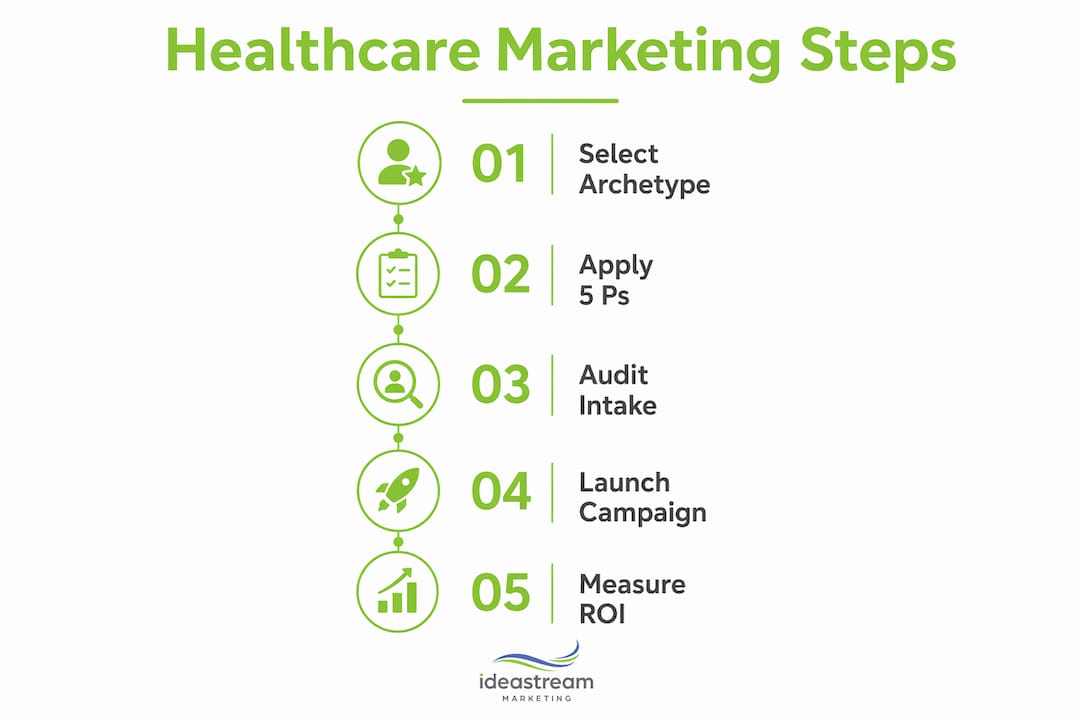
The most effective healthcare marketing tactics combine digital presence, content authority, reputation management, and paid media into a single coordinated system. No single tactic wins alone.

Online experience and responsive web design
Your website is the first clinical impression most patients form. A slow, mobile-unfriendly site signals disorganization before a patient reads a single word. SEO combined with content marketing enhances visibility and patient engagement more than paid ads alone over a 12-month horizon. Local SEO is especially critical because patients search for providers near them, and Google’s local pack dominates those results.
Content marketing and video
Educational content builds the trust that converts browsers into patients. Blog posts explaining procedures, FAQ pages addressing common concerns, and physician profile videos all reduce the anxiety that delays healthcare decisions. Video content surpasses static display creative for trust-building in 2026, making it a priority for programmatic display, Connected TV, and local SEO campaigns. A two-minute video of a surgeon explaining a procedure outperforms a banner ad by a wide margin on every engagement metric.
Reputation management and patient reviews
Positive patient reviews directly influence acquisition and retention. Patients read reviews before booking the same way they read Yelp before choosing a restaurant. Soliciting feedback through post-visit surveys, Google review requests, and Healthgrades profiles is not optional. It is a core acquisition channel.
Paid media and social advertising
Social media paid ads combined with organic strategies amplify reach and engagement in healthcare. Facebook and Instagram allow geographic and demographic targeting that works well for service line promotion. Programmatic display and Connected TV extend reach to households that are not actively searching but match your target patient profile.
| Strategy | Primary Goal | Best Channel |
|---|---|---|
| Local SEO | Patient acquisition | Google Search, Maps |
| Video content | Trust and education | YouTube, Connected TV |
| Paid social ads | Awareness and reach | Facebook, Instagram |
| Reputation management | Conversion and retention | Google, Healthgrades |
| CRM and email | Retention and lifetime value | Email, patient portal |
Pro Tip: Build your patient acquisition process before scaling paid media. Traffic without a clear intake path produces leads that disappear.
How can healthcare organizations measure and optimize marketing effectiveness?
Measurement in healthcare marketing is harder than in almost any other industry. The patient journey crosses digital ads, offline referrals, phone calls, and in-person visits before a conversion occurs. Standard last-click attribution assigns all credit to the final touchpoint and ignores everything that built the relationship.
Server-side attribution models help bridge HIPAA-protected EHR data and marketing platforms to map long patient journeys, including offline referral touchpoints, while maintaining privacy compliance. This approach requires investment in data infrastructure, but it produces a far more accurate picture of which channels actually drive patient acquisition.
Key performance indicators every healthcare marketing team should track:
- Patient acquisition cost (PAC): Total marketing spend divided by new patients acquired in a period
- Patient lifetime value (LTV): Projected revenue from a patient across all future visits and referrals
- Market share by service line: Your volume relative to competitors in a defined geography
- Referral source attribution: Which physicians, platforms, or campaigns generate the most qualified patients
- Conversion rate by channel: What percentage of leads from each source actually book and show up
Wasted budget is the most common outcome when organizations skip this infrastructure. Running a $50,000 campaign without knowing which channel produced which patients means you cannot scale what works or cut what does not. Aligning marketing spend with clinical capacity is the other half of the equation. Filling a schedule beyond capacity damages patient experience and erodes the reputation you spent money to build.
Key takeaways
Effective healthcare marketing requires aligning clinical capacity, compliant data infrastructure, and multi-channel tactics to drive sustainable patient growth.
| Point | Details |
|---|---|
| Strategic archetype first | Match your positioning model to your organization type before choosing any channel. |
| Clinical capacity alignment | Never run acquisition campaigns for service lines that cannot handle the volume. |
| Multi-channel attribution | Build server-side attribution to track both digital and offline patient touchpoints. |
| Video leads trust-building | Prioritize video content across programmatic, Connected TV, and local SEO campaigns. |
| Retention drives LTV | Lifecycle marketing focused on patient retention outperforms pure acquisition over time. |
What I have learned after years of watching healthcare marketing miss the mark
Healthcare marketers are often handed a budget and told to grow patient volume. What they rarely receive is a clear picture of clinical capacity, a compliant data infrastructure, or a measurement system that accounts for the full patient journey. The result is a lot of activity that looks good in a monthly report but does not move the needle on actual growth.
The organizations I have seen succeed treat marketing as an operational function, not a communications department. They know their patient acquisition cost. They track referral source attribution. They have someone accountable for the gap between a lead and a booked appointment. That level of discipline is rare, and it is exactly what separates the health systems that grow from the ones that spend and wonder why.
The other pattern I keep seeing is the isolation of tactics. A hospital runs a social campaign here, a billboard there, a Google Ads test for one quarter, and then wonders why nothing compounds. Strategic marketing that drives growth requires integration. Every channel should reinforce the others, and every campaign should feed a measurement system that tells you what to do next.
My honest advice: before you add another channel, fix your attribution. You cannot optimize what you cannot measure, and in healthcare, the measurement problem is almost always bigger than the creative problem.
— Dean
How Idea Stream Marketing helps healthcare organizations build marketing systems that work
Healthcare marketing requires more than a good-looking website or a few social posts. It requires a connected system where SEO, content, paid media, and data all work together.
Idea Stream Marketing builds AI-driven SEO services and data-driven web design specifically for organizations that need to rank higher, convert more patients, and measure what actually works. Our team handles video production, social media strategy, Google Ads management, and local SEO from a single integrated system. If your healthcare organization is ready to connect marketing spend to real patient growth, we are ready to build that system with you. Schedule a consultation and let us show you what a connected strategy looks like in practice.
FAQ
What is healthcare marketing?
Healthcare marketing is the practice of promoting health services, building patient relationships, and growing a healthcare organization’s patient base through targeted digital and offline strategies. It operates under strict regulatory requirements, including HIPAA, that shape how data is collected and used.
How do you define a healthcare marketing strategy?
A healthcare marketing strategy is a structured plan that aligns an organization’s clinical capacity, patient acquisition goals, and regulatory requirements with specific channels and tactics. It includes strategic positioning, multi-channel execution, and a measurement framework built for long patient decision cycles.
What are the most effective healthcare marketing tactics in 2026?
Local SEO, video content, reputation management, and paid social advertising are the top tactics driving patient acquisition and engagement in 2026. These work best when integrated into a single system with proper attribution tracking.
Why is HIPAA compliance critical in healthcare marketing?
HIPAA restricts how patient data can be collected, stored, and used in marketing campaigns. Standard ad tracking tools like Meta Pixel can create compliance exposure, making server-side attribution and legal review necessary before deploying most digital ad tech.
How should healthcare organizations measure marketing ROI?
Healthcare organizations should track patient acquisition cost, patient lifetime value, referral source attribution, and conversion rates by channel. Server-side attribution models that connect EHR data with marketing platforms provide the most accurate picture of which campaigns drive real patient growth.

